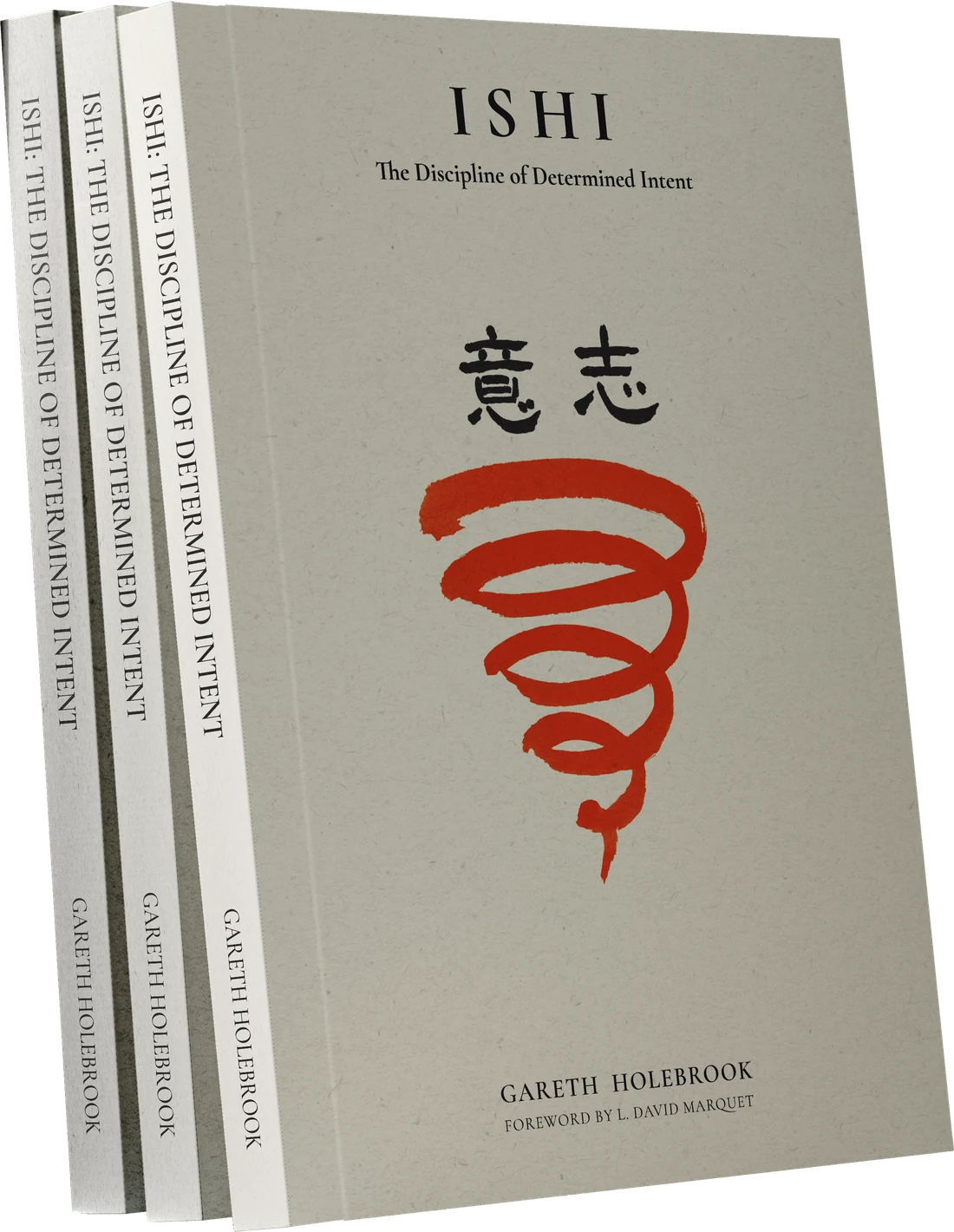
Ishi 意志
What is Ishi?
Ishi (意志) is usually translated as ‘will’, ‘determination’ or ‘intent’. None of those words are wrong, but none are sufficient either.
Ishi describes the condition where thought and action are bound together tightly enough to withstand friction. It is intent that moves, persists and remains coherent under strain.
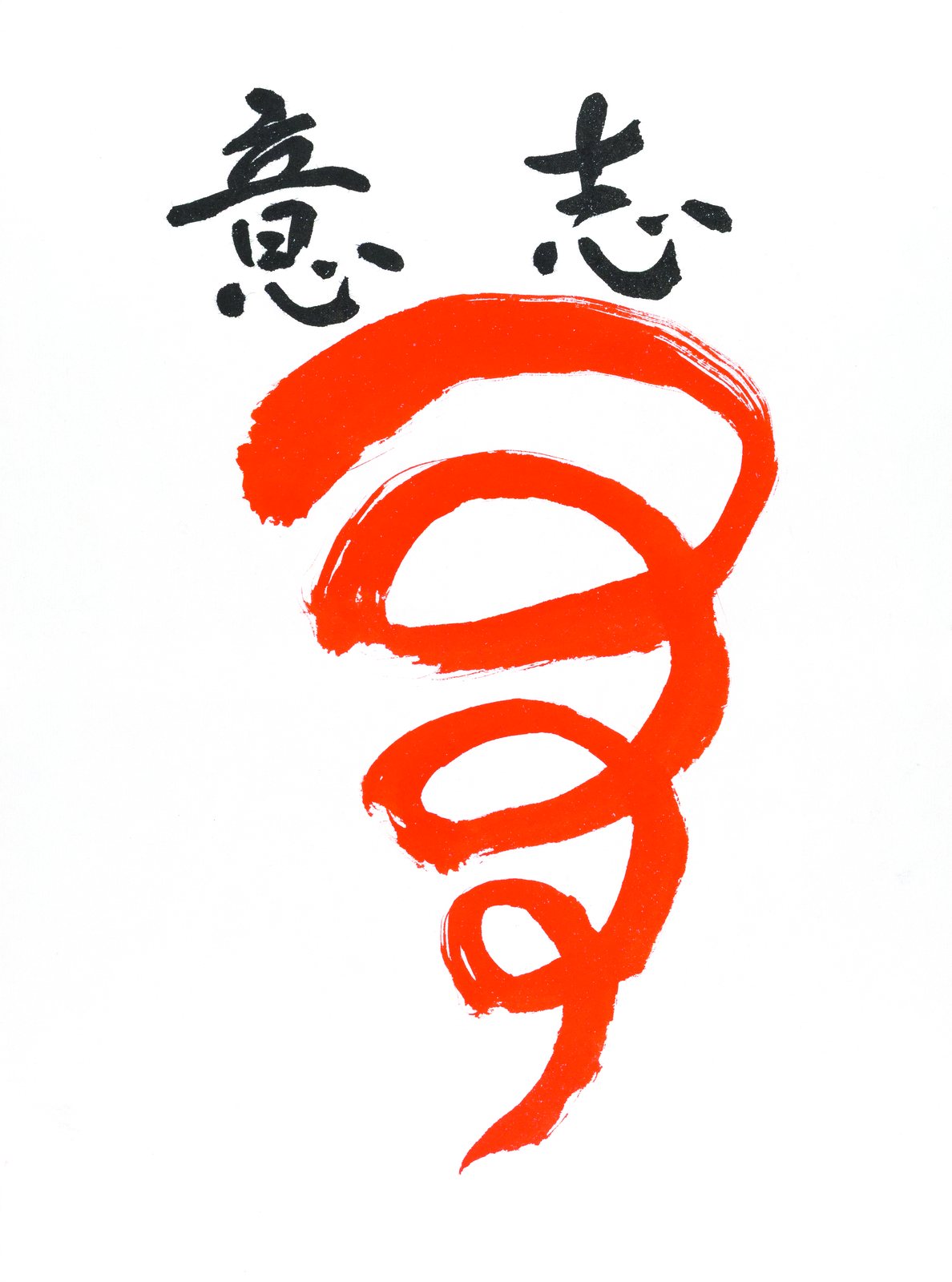
The kanji
2 characters, one centre
Ishi is formed from 2 characters, 意 (i) and 志 (shi), both of which are anchored in 心 (kokoro), meaning ‘heart’ or ‘mind’.
- 意The first character comprising Ishi, 意, carries the sense of awareness, orientation and inner attention. It is intention as perception. The character itself is built from 音 (oto, ‘sound’) placed above 心.
- 志The second character comprising Ishi, 志, carries the meaning of disciplined will. It is resolve shaped by purpose. It is follow-through rather than force. The character combines 士 (shi, ‘samurai’ or ‘one who serves’) with 心.
Together these characters form Ishi. Thought that leads to action. Action that is thoughtful.
The decision
Ishi exists at the point where choice becomes governable. Ishi is the moment that vague intent sharpens into a decision you’re committed to defending.
The Decide phase is the point where intent becomes fixed. Not permanently and not beyond review, but fixed enough to govern action, endurance and reflection without constant renegotiation.
One word, 3 meanings
Ishi
- The conceptFirst, it names the Japanese concept of governed will, intent made actionable.
- The disciplineSecond, it names the novel discipline of self-governance set out in this book: the Ishi Spiral.
- The phaseThird, it identifies the first phase of the Spiral, the Decide (Ishi) phase, where decisions are made and bounded.
The practice
The Ishi Spiral
A four-phase discipline of personal self-governance
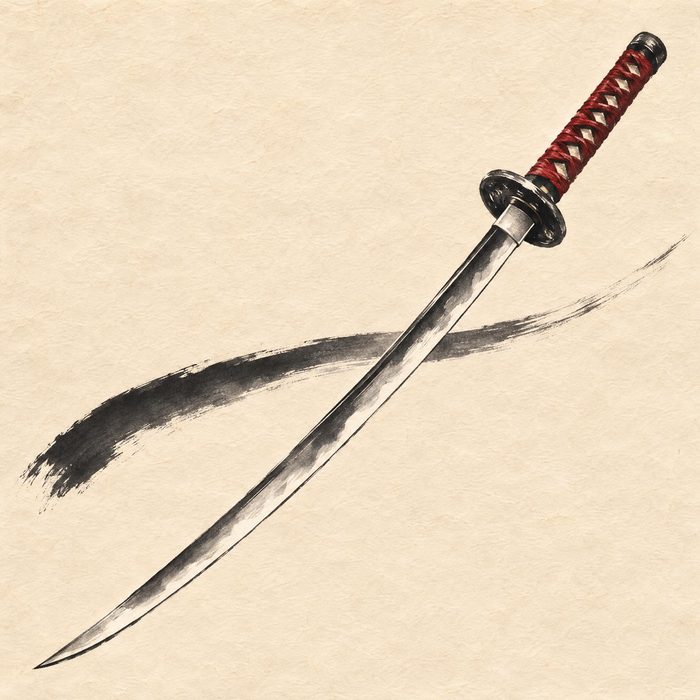 01DecideIshiChoose and constrain
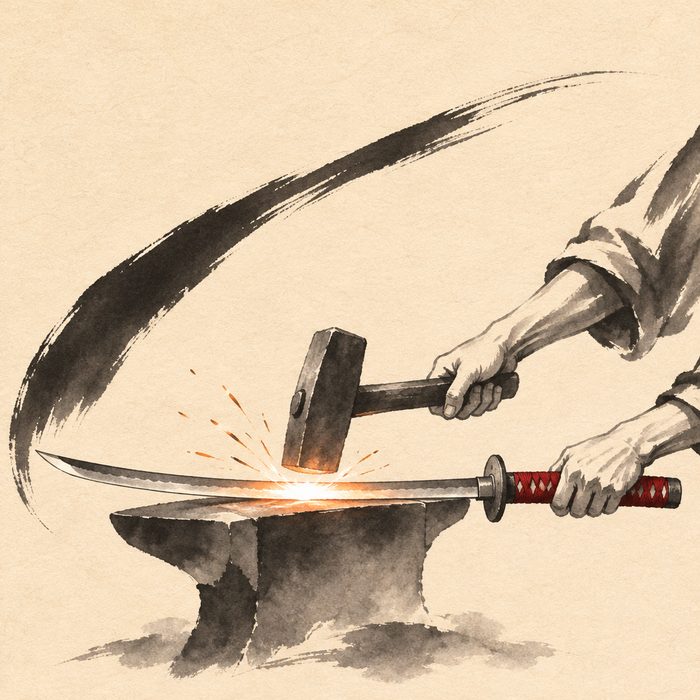
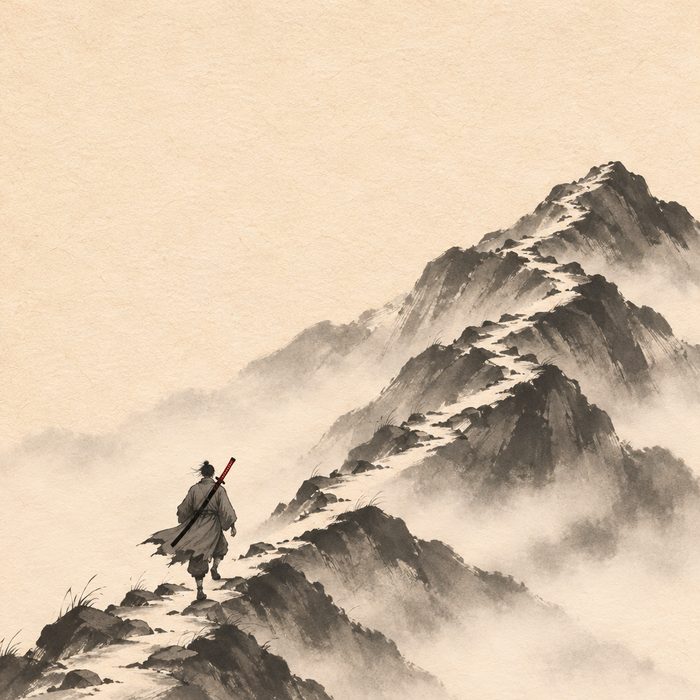
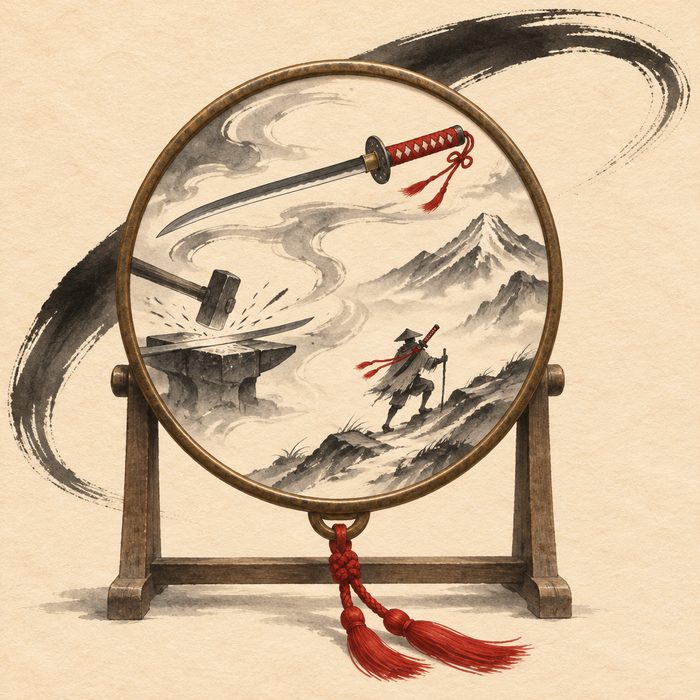
Ishi fixes intent, Shugyo builds capability, Gaman sustains effort and Hansei restores calibration.
The process
How does Ishi work?
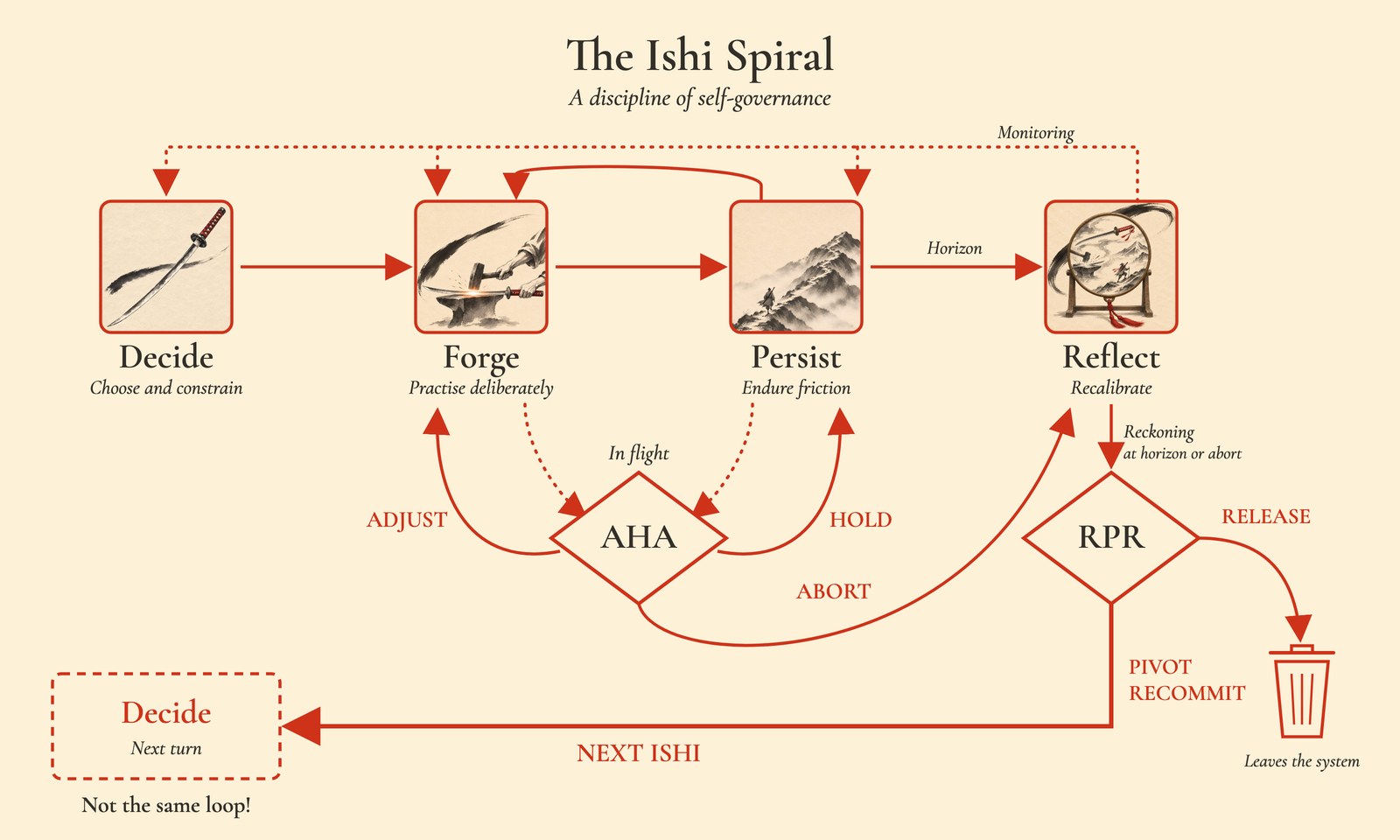
Ishi is a dynamic system in motion. It rotates like a vortex. The 4 phases, Decide, Forge, Persist and Reflect, run in sequence and at the same time.
If your mental model is a 4-step process with a Japanese art form on top, this is not it.
AHA at the heart
The heart of Ishi is self-governance, and its form is AHA (pronounced A-Hey): Adjust, Hold or Abort. AHA works in flight, while Forge and Persist are under way.
Adjust means more Forge. The Ishi stands and the practice changes.
Hold means more Persist. Effort continues at the authorised intensity. Hold means hold the line.
Abort ends the Ishi and sends it to Reflect, where the reckoning begins.
Sequential and concurrent
Reflection happens at the end of the time horizon as a reckoning. It also happens during the event as monitoring, the dotted line back to Decide, Forge and Persist.
Deliberate practice needs persistence. Persistence needs purpose. Purpose requires reflection, and reflection needs honesty about the founding decision.
The reckoning: RPR
At the horizon, or after an Abort, reflection becomes a reckoning. It closes with a verdict, RPR (pronounced R-Par): Recommit, Pivot or Release.
Recommit and Pivot feed the next Ishi. Release lets the Ishi go. It leaves the system.
Not the same loop
The diagram has a return arrow, and it is the paradox. It is not a loop where you return to a starting point. You don't. You and the environment are both in emergence, so the next Decide is a new turn of the spiral.
From here
Where to go next
- Ishi: The Discipline of Determined IntentIshi is a discipline of self-governance.
- The Ishi SpiralA four-phase discipline of personal self-governance.
- How does Ishi work?The Ishi Spiral as a process: AHA in flight, RPR at the horizon.
- The Ishi Spiral: A Foundational GuideDownload the guide.
- Kaizen of the DayBuilt to turn the Ishi Spiral into daily practice.
- KetteiKettei is when intent is held outside a single skull.
- CoachingBased on the Ishi Spiral.