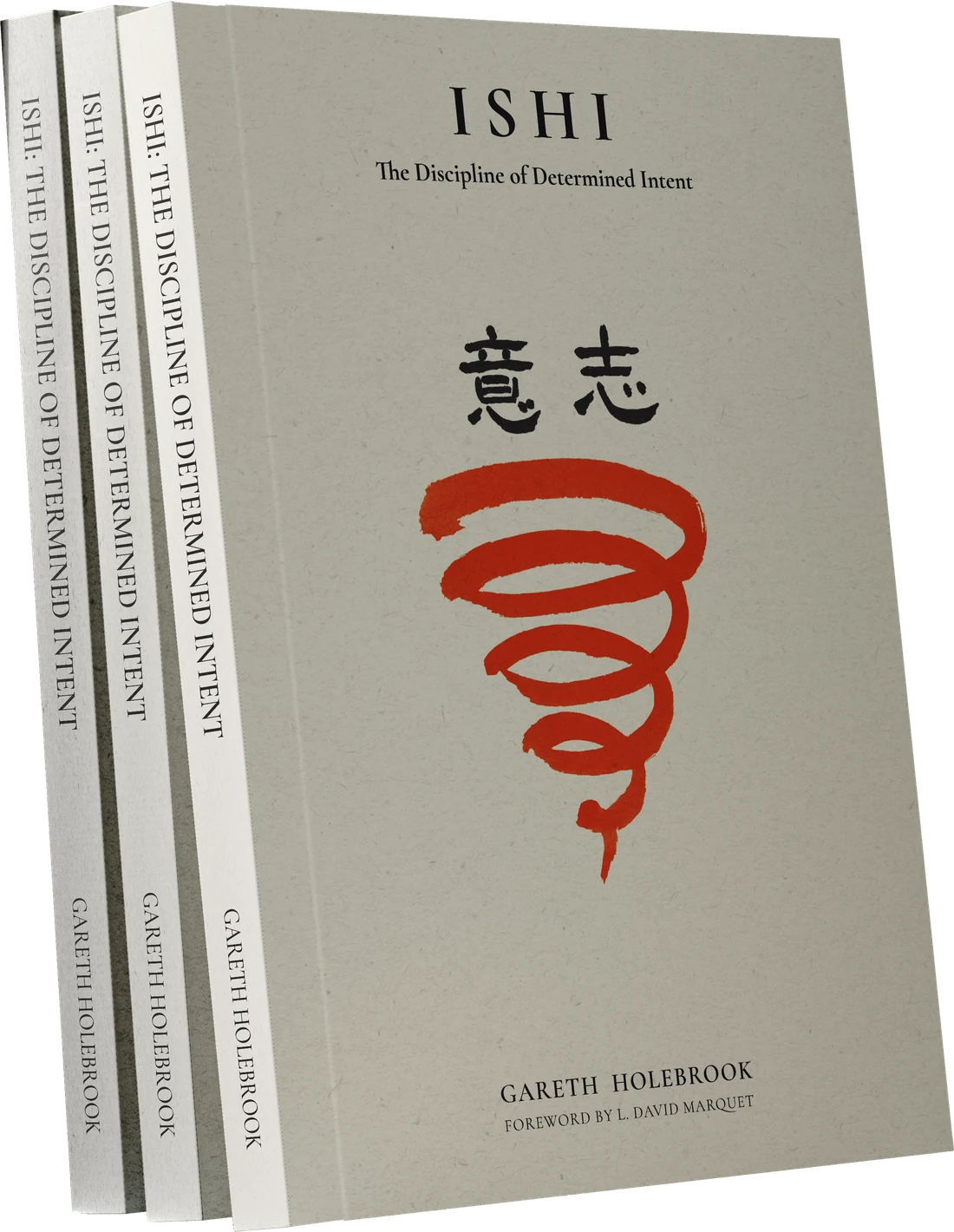
Weekly Ishi 25 August 2026
Weekly Ishi 11: The Four Samurai
The cuts that would not stay cut
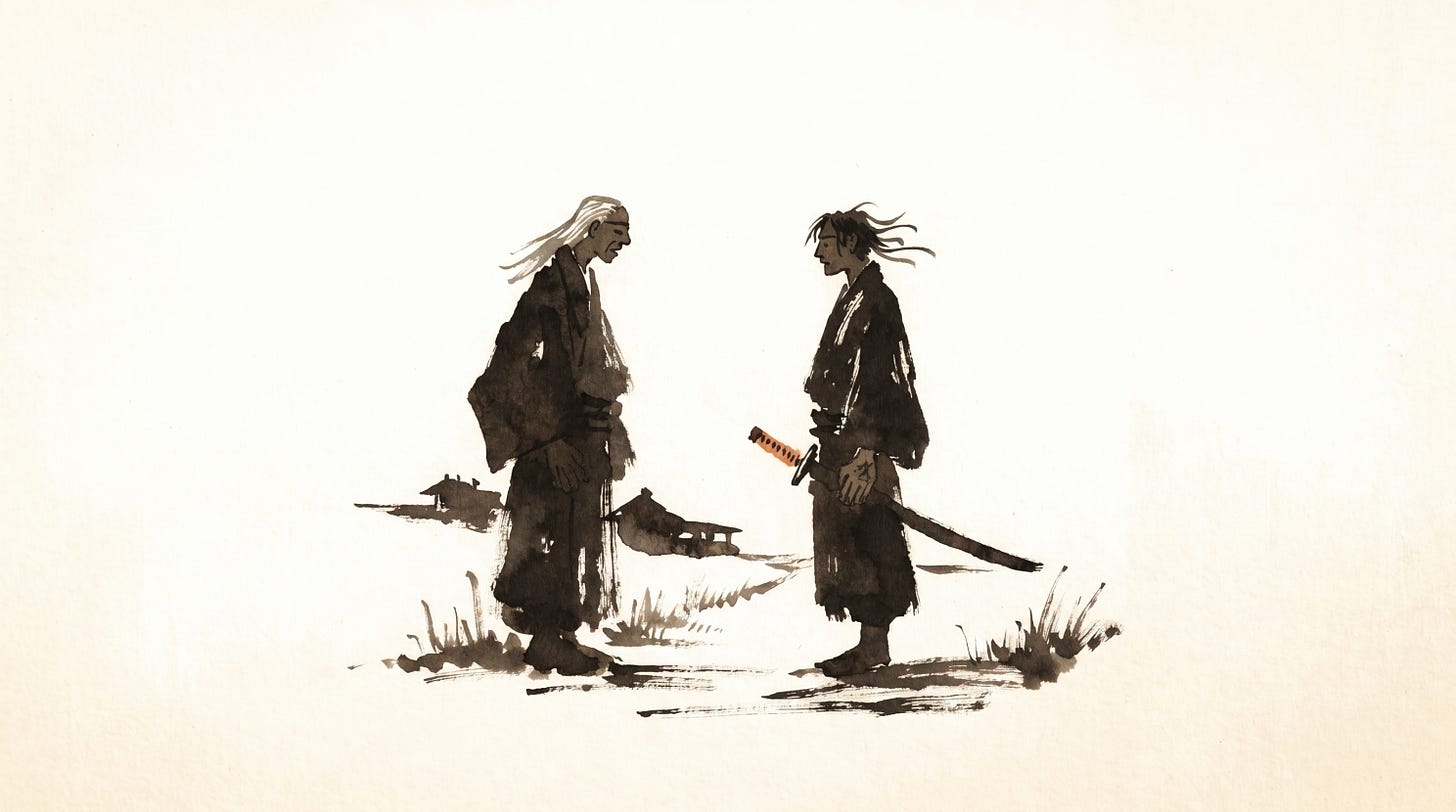
While I was writing Ishi: The Discipline of Determined Intent I wrote 4 parables. Four samurai, trained in the same dojo, each capable, each failing in a way none of the others would recognise.
Every one came out in the edit. My own book was pushing past 60,000 words and something had to go, so the parables went.
This week the stories get told properly. A full video and a set of shorts, on my YouTube channel.
Why 4 stories rather than one?
A single story teaches a single lesson. Set 4 failures beside one another andwe get something else, which is a pattern. Each samurai is strong in 3 phases of the Spiral and missing the fourth, and it is the absence that does the damage.
Take a discipline that holds a person steady under load. Remove one part of it. A particular failure walks in and settles where the missing part used to be, and it is the same failure every time. That predictability is the useful part, because it turns the problem into something addressable rather than a question of character.
The Ishi Spiral has 4 phases. Decide, Forge, Persist and Reflect, or Ishi (意志), Shugyo (修行), Gaman (我慢) and Hansei (反省). Decide sets the commitment, its horizon, and the conditions under which it ends. Forge turns intent into capability through corrected, repeated practice, most of it unglamorous. Persist holds the line when conditions deteriorate, with its own governor of 3 responses set in advance: Adjust, Hold, Abort. Reflect closes the cycle by separating the quality of a decision from the quality of its outcome.
The word spiral is intentional. The 4 phases run concurrently rather than sequentially, and none is ever finished with. A bias towards one and away from another collapses the integrity of the whole thing. That is the argument these stories are making.
The 4 samurai
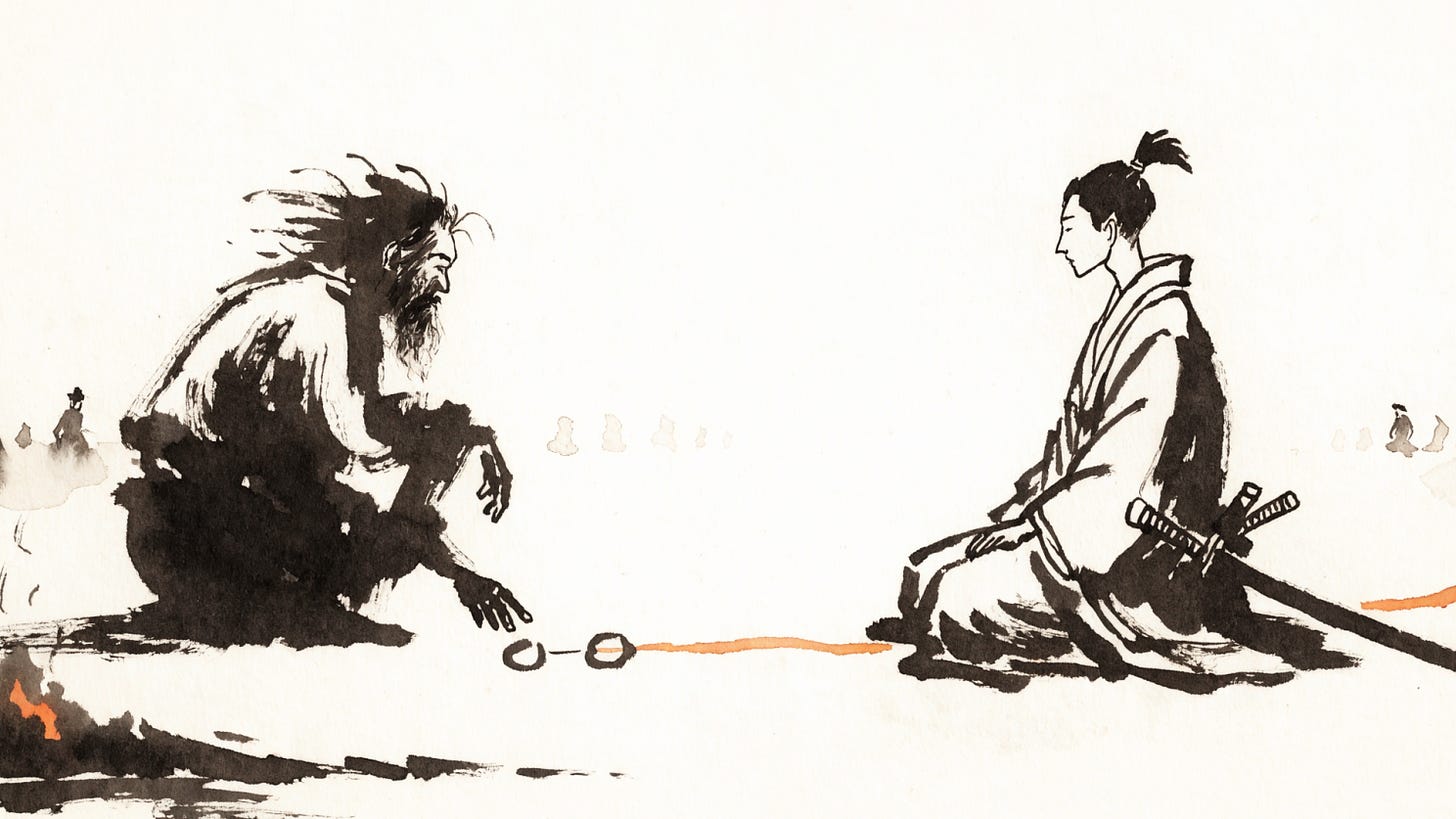
Yuki would not begin. He read every manual, could quote a hundred teachers, and polished his sword daily without ever drawing it. His sensei drew 2 circles in the dirt, thought and action, with a river running between. Yuki admired that river every morning and never crossed it. Call it laziness and you have misread him. He was protecting a perfect plan that the first clumsy attempt would have ruined. This is Ishi without Shugyo. The decision was made and the forge was never lit.
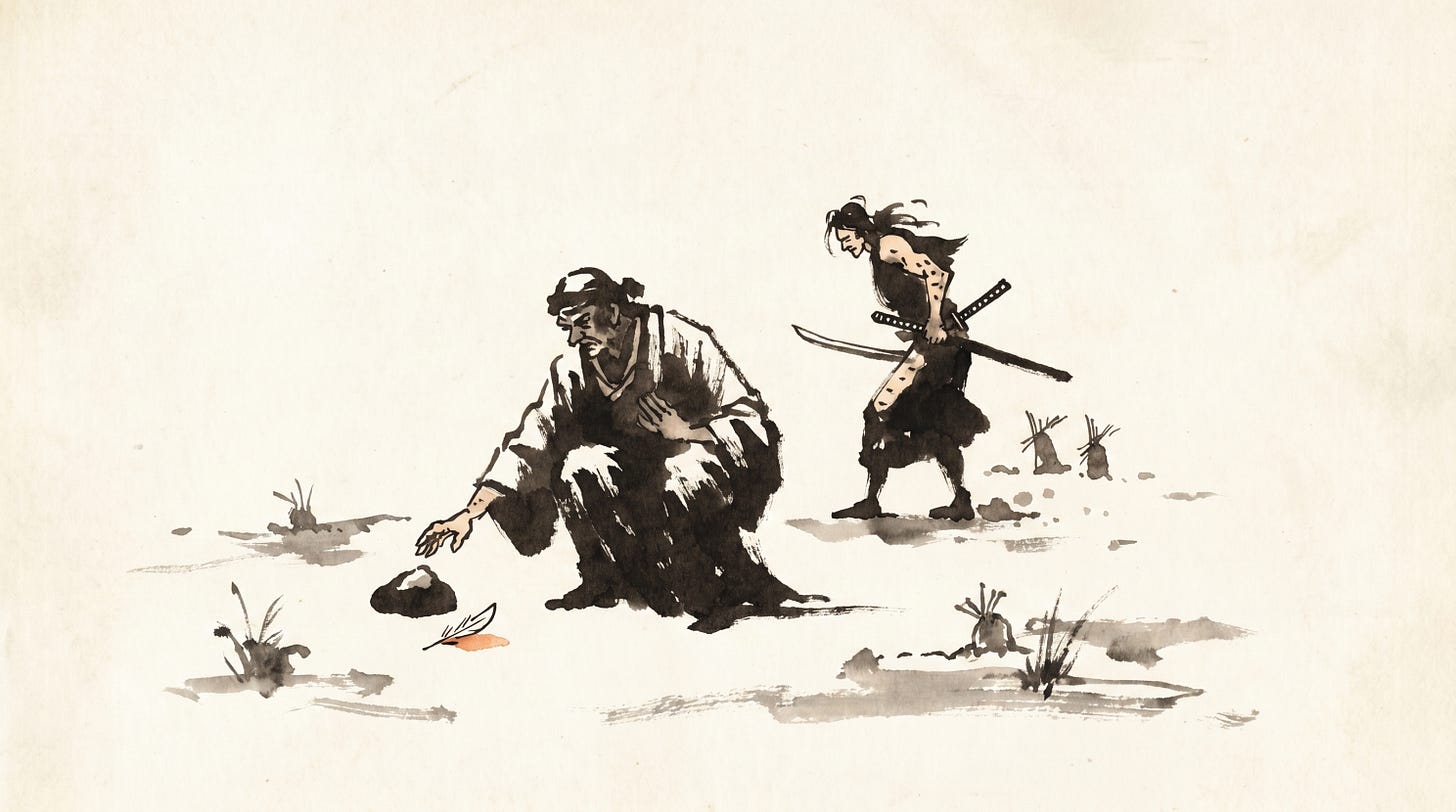
Hayato would not aim. The same failure inverted. He woke before dawn, struck first, won the first exchange and lost the longer fight, again and again. His general set a rock and a feather on the ground. The feather moves first and the wind blows it away. The rock holds its place because something steadies it. From the outside Hayato looked committed, and it was drift at a higher pace. The calendar was full and the work went nowhere. This is Shugyo without Ishi.
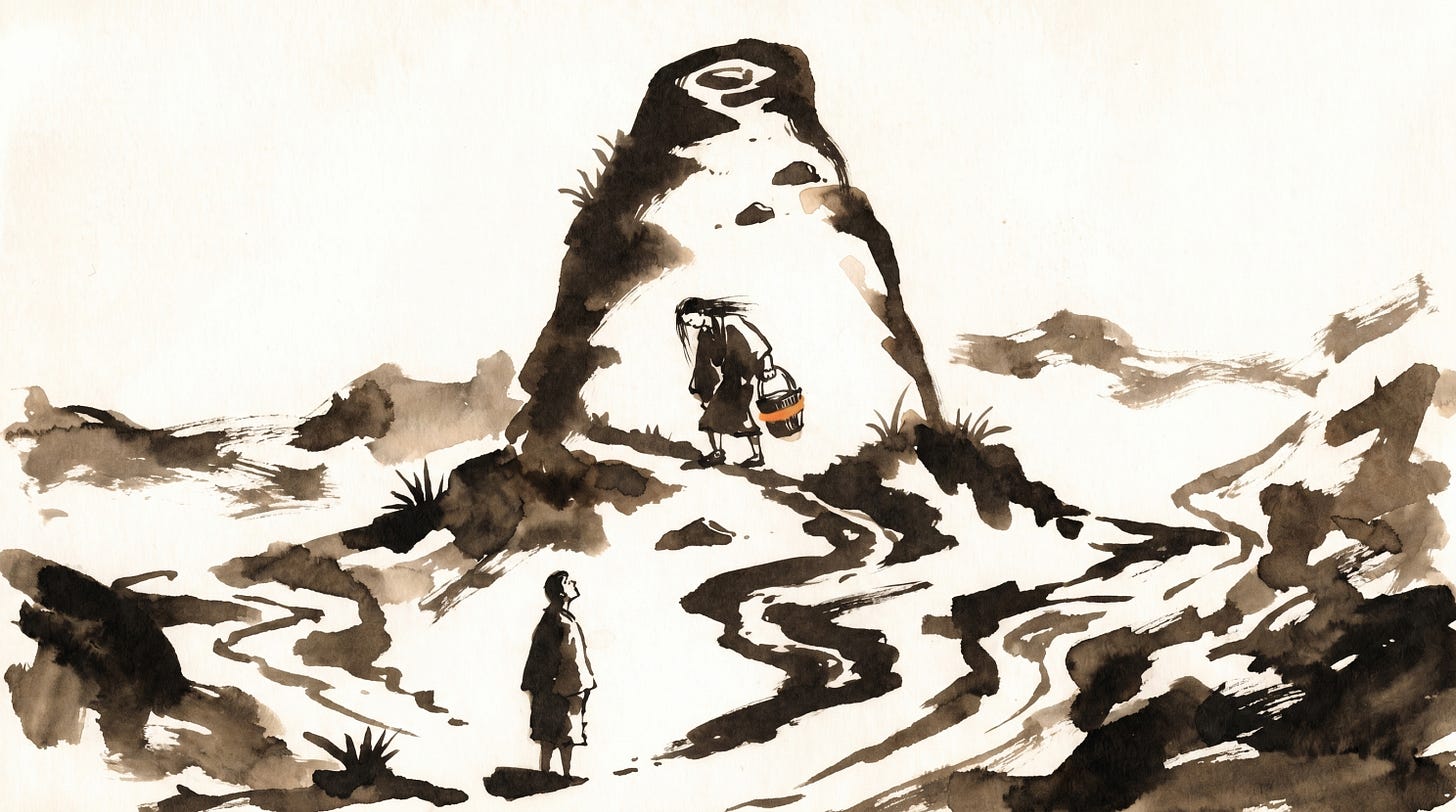
Taro would not govern the climb. Sent up the mountain for spring water, he stopped at a muddy stream halfway and brought that home. The master poured it on the ground and sent him back. So Taro climbed again, slower, and brought clear water down without spilling a drop, and he was proud of it. Then he learned the wrong lesson. Sent higher, and told to turn for home if the storm came off the peak, he pushed on when it came, because turning back now felt like the old weakness returning. He spent the night against a rock with an empty bucket. Stopping short and pushing too far are the same failure read from opposite ends. To push hard is a virtue. To push too hard is folly wearing the virtue’s clothes. This is persistence without self-governance.
Riku would not look back. He won for years and learned nothing from any of it. His record was near spotless and his confidence absolute. One evening an older samurai stopped him on the path and asked what the winning had taught him, and he had no answer. A blade can be sharp while the sight stays blind. He had decided well, trained hard and endured. He had simply stopped looking back. This is progress without Hansei. The cure was 15 seconds, the bow at the end of the session that he had been skipping for years.
The part I care about
Not one of these samurai is lazy. Not one is a bad person. Each has lost awareness of one thing: his own decision making, his deliberate practice, his governed persistence, or his honest reflection.
This is both people I have observed and patterns I’ve seen in myself. I was Yuki with a business plan I refined for months while the market moved on without me. I tend towards Hayato and always have. I was Taro at Kona in 2022, 35 kilometres into the marathon and 18 years after I set out to qualify, lying on the road with my race gone and no condition written down that would have told me when to stop. I was Riku for most of a decade of racing, collecting finishes and never stopping to ask why the same failure kept turning up in different clothes.
My sense as a child was that parables moralise. These are trying to do something mroe specific Watch yourself across any long piece of work and you will meet all 4 samurai. Yuki when you plan instead of start. Hayato when you fill the day to avoid the question. Taro when you quit early, or refuse to quit at all. Riku when you win and never ask why.
Name the one that has the floor today, and you know which phase to go back to. That is the whole practice. It takes about 30 seconds.
Watch this space
The full video and the shorts drop on YouTube later this week. Each samurai gets his own short, and the long version puts all 4 side by side with the Spiral underneath. The shodo for each phase was written for me by Inoue Shunbo of Imabari City, and it is on screen as each phase is named.
Subscribe to the channel and each parable will reach you as it goes live:
https://www.youtube.com/@garethholebrook
The Ishi Equinox
One more thing, and there will be more detail over the coming weeks. I am opening a programme, and this is the first mention of it here. The full explanation, including a live webinar, follows shortly.
The Ishi Equinox starts on 21 September, and it is limited to 8 people. The cap is deliberate rather than a marketing device, and is driven by my capacity and insistence on the quality of the coaching I provide. Weekly 1-to-1 work does not scale, and 8 is what I can hold properly alongside everything else.
It is a 3 month programme of weekly 1-to-1 coaching and 12 webinar sessions. The webinars walk through the whole of the Ishi Spiral: setting intent, building the practice, governing persistence, and learning to reflect honestly. The coaching is where you apply it to whatever you have decided is worth 3 months of your attention, and that part is yours to choose.
The timing is built around the finish line rather than the start. Most New Year resolutions are gone by the second Friday of January, because 1 January is the worst possible day to begin anything. You are asked to install a new practice on the day your ordinary life restarts. The Equinox runs the other way round. Start now, and reach New Year’s Day with the habits already in place, already tested, ready to compound through 2027 rather than collapse in week 2.
If you want to know more before the rest of the detail is published, message me or leave a comment. I will answer every one personally. A live webinar explaining the whole thing follows in the next few weeks.
First published on Substack: read Weekly Ishi 11: The Four Samurai on Substack.