Weekly Ishi 20 October 2026
Weekly Ishi 18: The Shodō Behind Ishi
Every work of calligraphy in my book and the ensō that inspired the spiral.
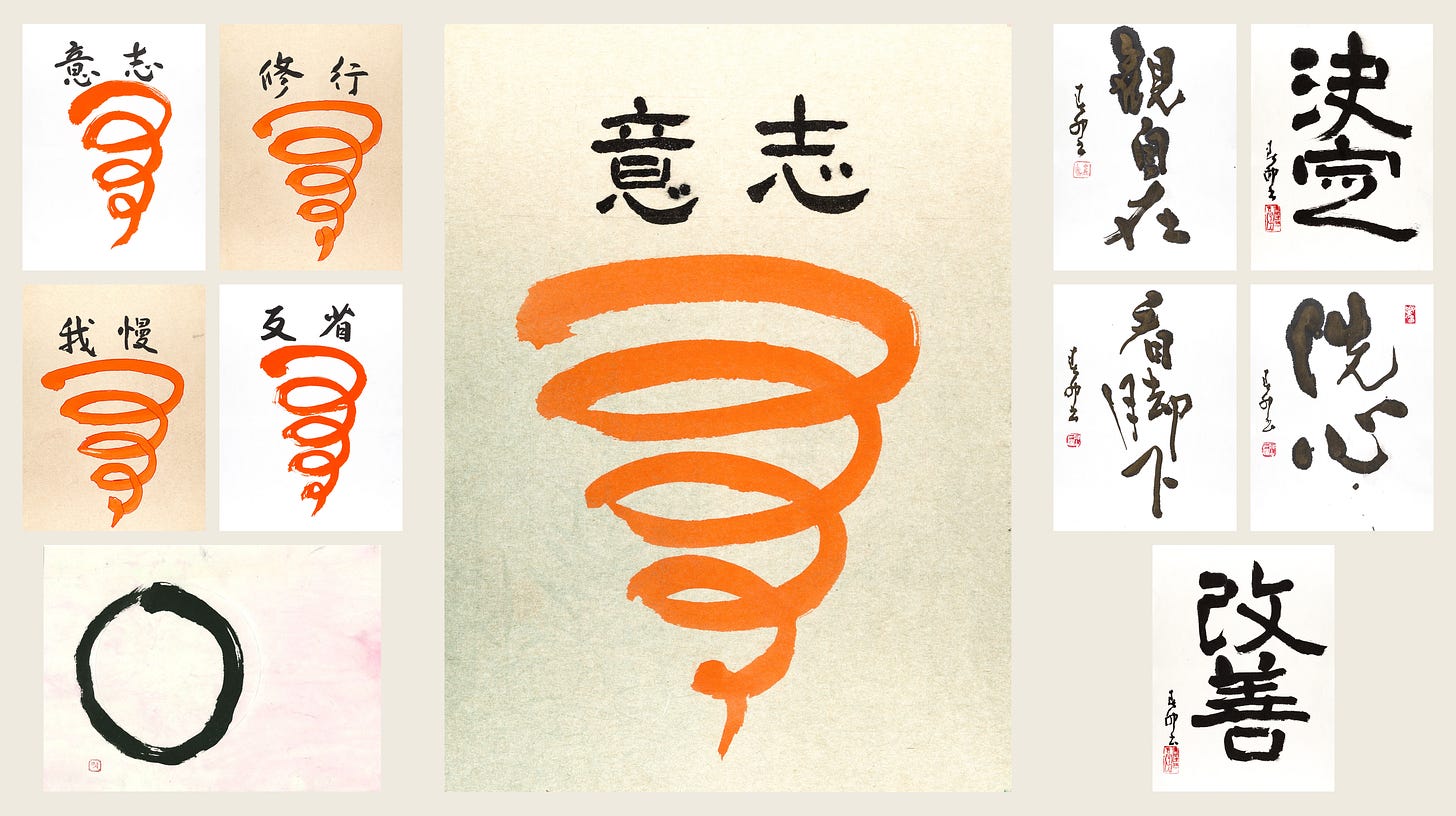
Japanese calligraphy is placed on the cover of Ishi: The Discipline of Determined Intent and at the thresholds inside it. Reknown calligrapher, Shunbō Inoue of Imabari City in Japan brushed it, through the kindness of Kevin McAloon, whose family made the introduction. This edition gathers the whole family in one place, with what each work says, what the word means in Japanese and where it sits in my book.
For each work I keep the dictionary sense of the characters apart from my own reading. In the acknowledgement of the calligraphy I set the standard for any Japanese in my book at accuracy, humility, respect and proper craft, and described myself as still a student. That standard holds here.
意志, on the cover
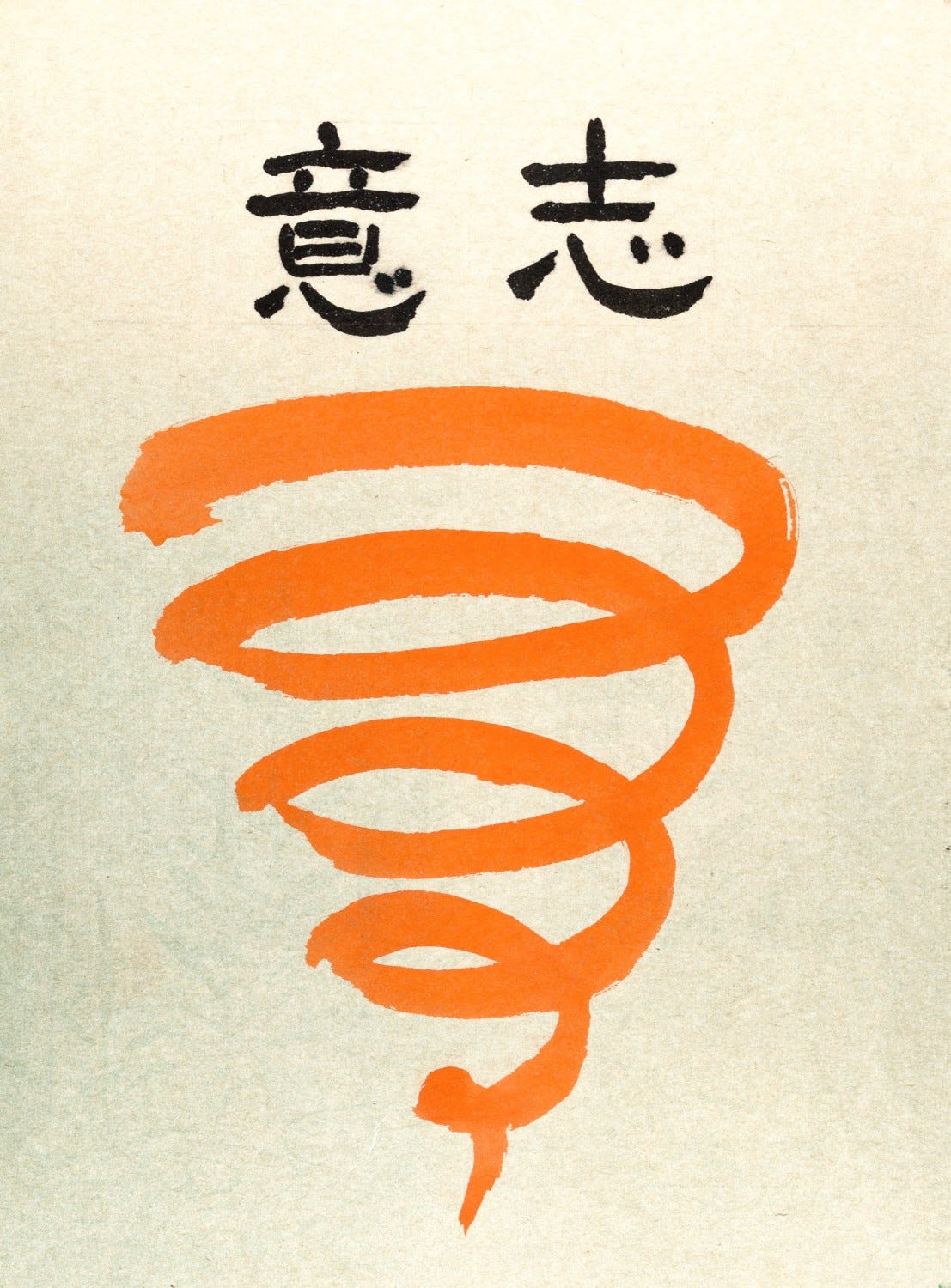
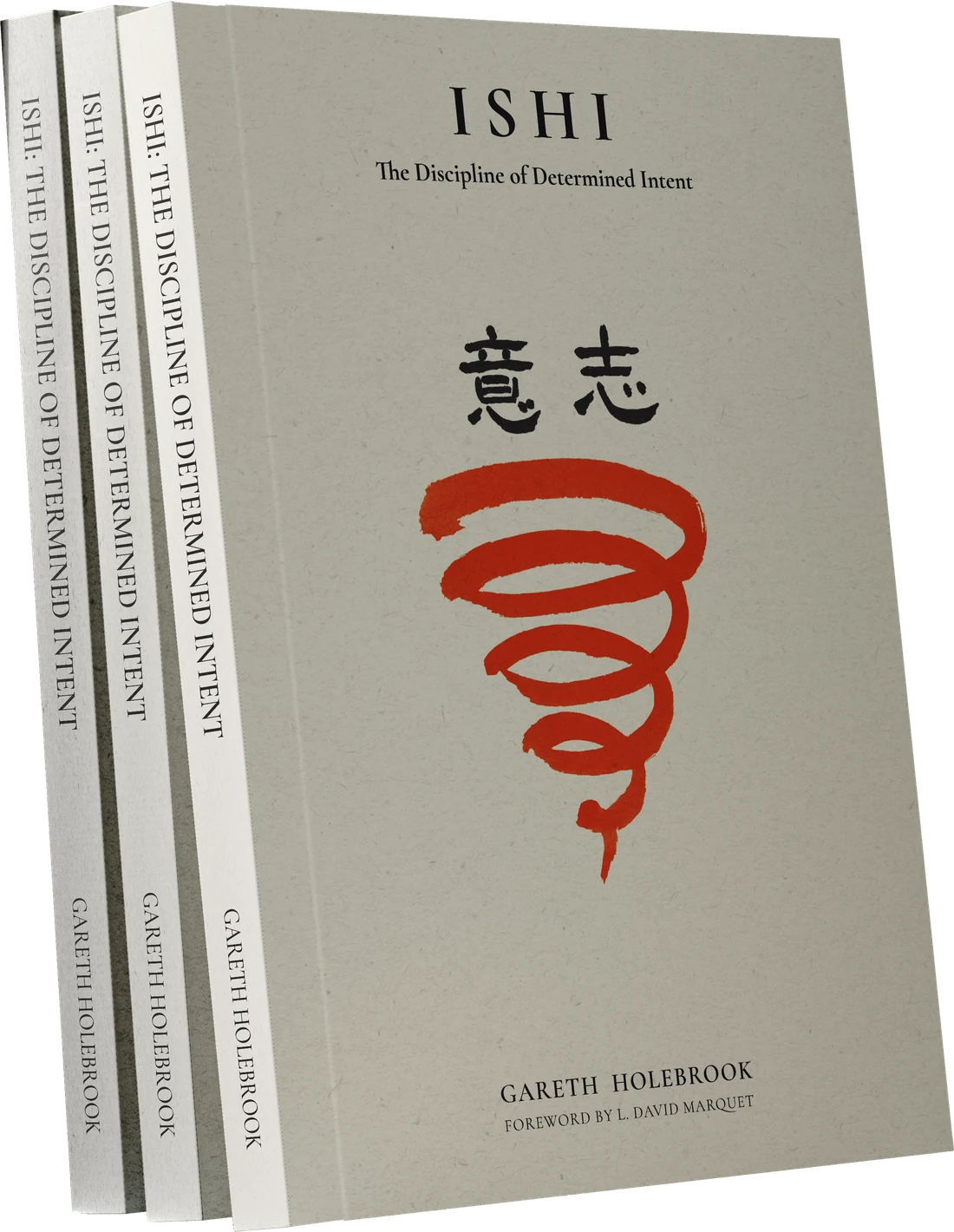
The cover of Ishi is one locked composition, the kanji 意志 above an orange spiral, with the proportion between the 2 fixed. This 意志 is a separate work from the one that opens the Decide chapter. The word is usually translated as will, determination or intent, and the dictionary gives will, volition, intention and determination.
Just before Ishi shipped, that lock broke. The brief had been explicit about the proportion, and it held across 4 versions of the cover. Between the fourth and the fifth, the kanji shrank by almost half while the spiral barely moved. I approved the fifth without seeing the breach, because my eye found the smaller kanji I wanted and stopped looking. A printed proof caught it at the last gate, and the review is what I changed.
観自在, Kanjizai
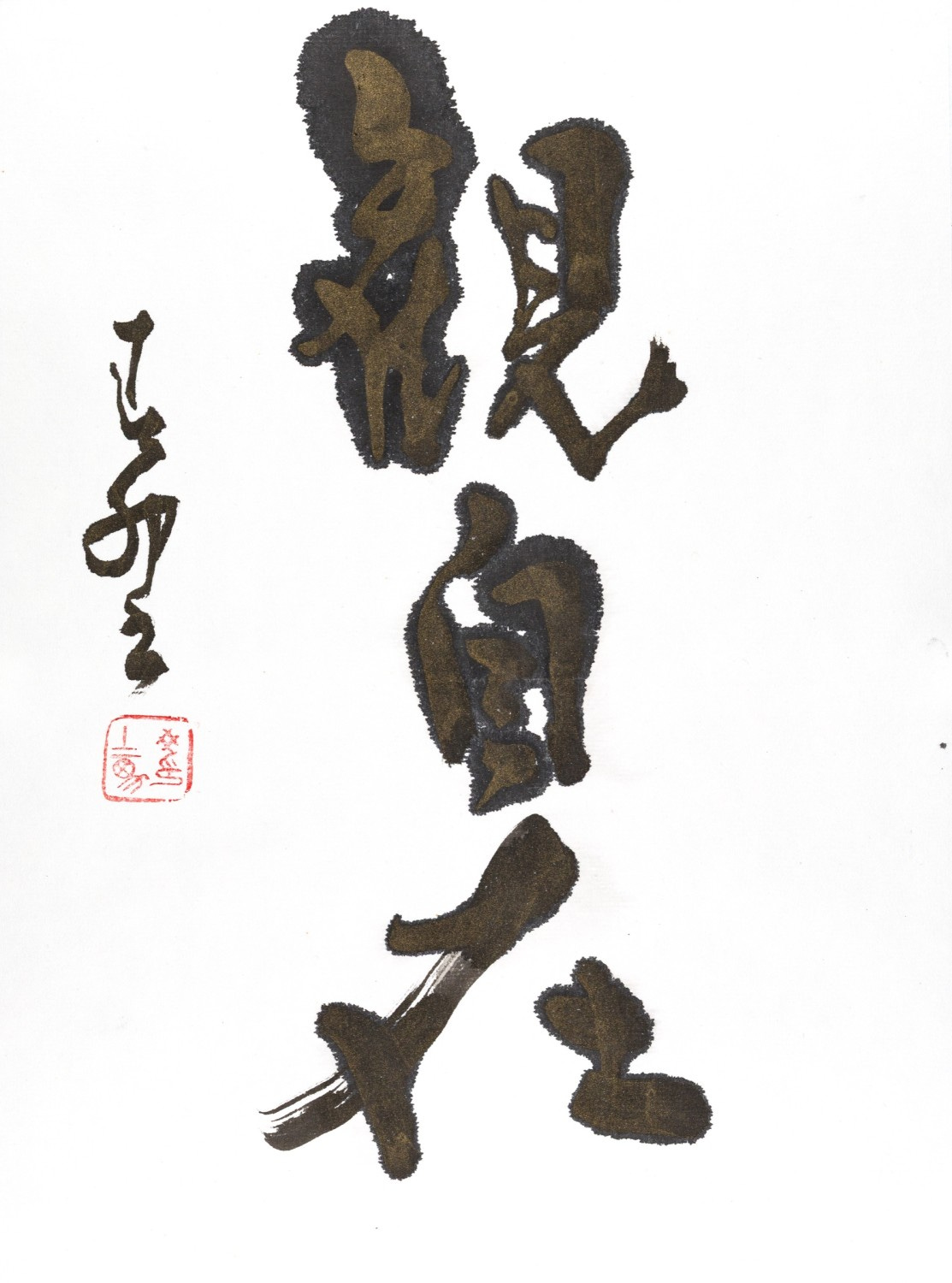
Inside my book, the first calligraphy is Kanjizai, 観自在, on the page before the acknowledgement. As a word it is a Buddhist name, listed in the dictionary as Avalokiteshvara, also called Kannon, a deity of compassion. Taken character by character, 観 means view or outlook, and 自在 means being able to do as one pleases.
I placed it there to invite clear seeing and unforced attention before action. The reading is mine, and the word keeps its Buddhist sense.
決定, Kettei
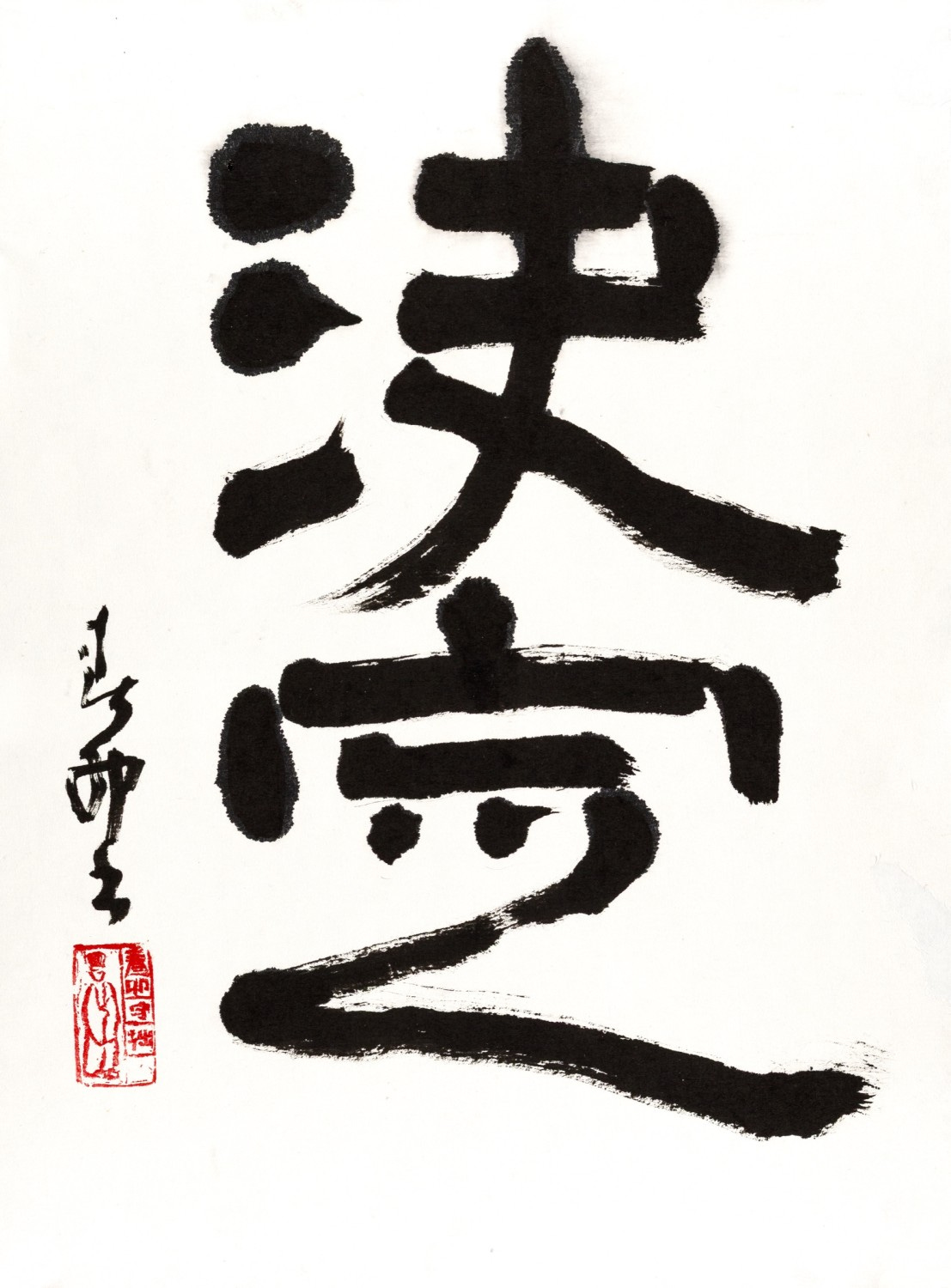
Kettei, 決定, faces the opening of Part III, where the Spiral itself begins. In the dictionary it is decision and determination, and in my book Kettei holds the sense of something decided and fixed.
I added it to mark the moment where intent becomes decision, a commitment fixed clearly enough to govern what follows. My book puts the test in one line: “Without Kettei, intent remains provisional; with it, action has a standard.” The same word names my third book, Kettei: The Discipline of Governed Intent, which takes the discipline to intent held by more than one person.
意志, Ishi, the Decide phase
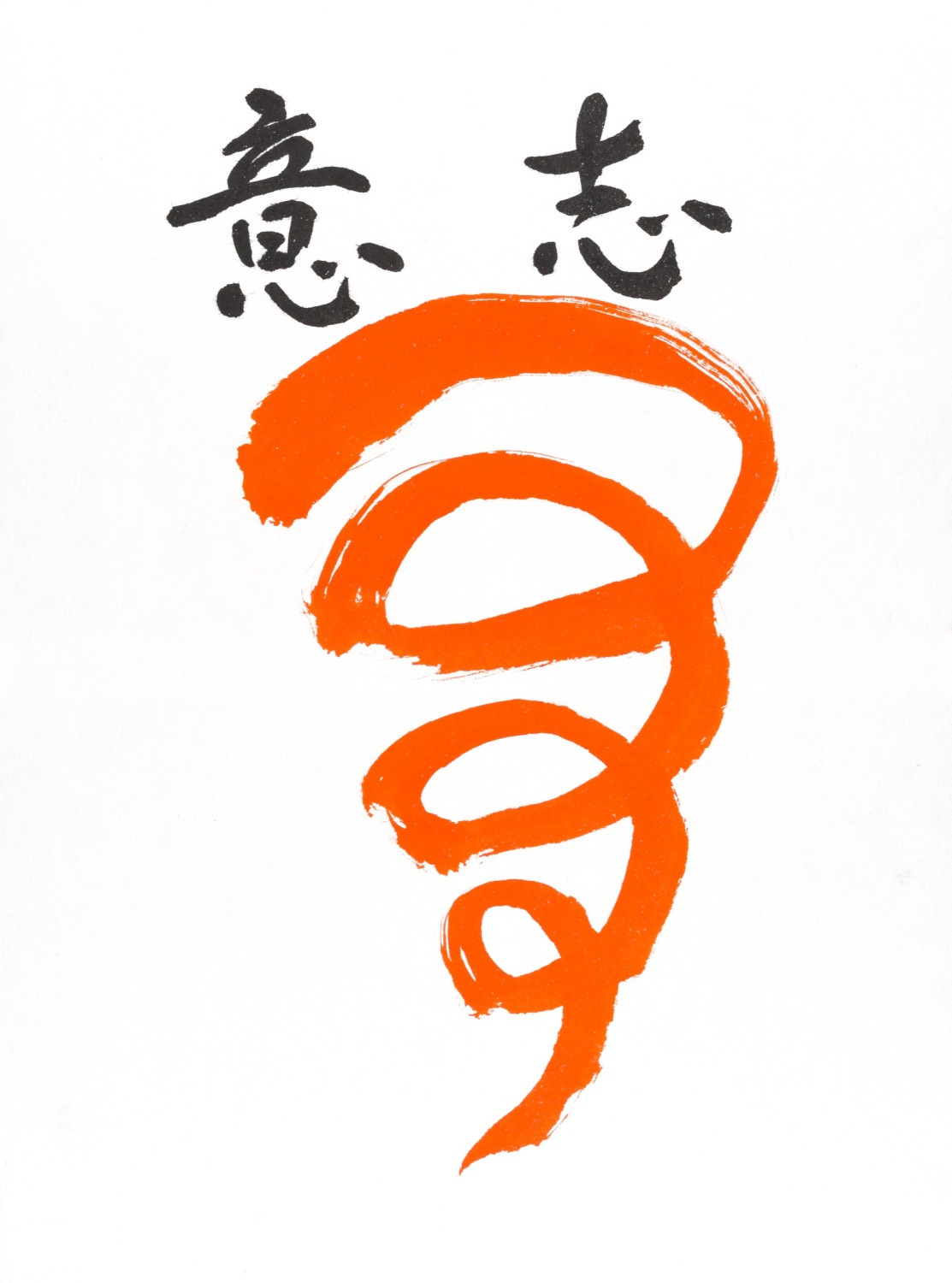
Commissioned around the phases of the Ishi Spiral, the 4 phase works each stand before a chapter, with the kanji above an orange spiral. Inoue-san wrote the 4 in gyosho, a semi-cursive script. That choice resonates with me, because those chapters concern lived self-governance, where intent is enacted continuously.
When I first shared the 4 works, in March, I described the black as naming reality and the red as experiencing reality. I also wrote that “The kanji is stable across readings. The spiral changes meaning depending on which kanji anchors it.” My line for the whole set was “You are always doing the spiral. The phase is the stance you take toward it.” Read that way, the 4 works show one continuous path seen from 4 positions.
This Ishi, 意志, opens the Decide chapter, Choose and Constrain. In my book I describe 意 as awareness, orientation and inner attention, and 志 as disciplined will, with both characters anchored in 心, kokoro, heart or mind. I read this work as “commitment expands possibility”.
修行, Shugyo, the Forge phase
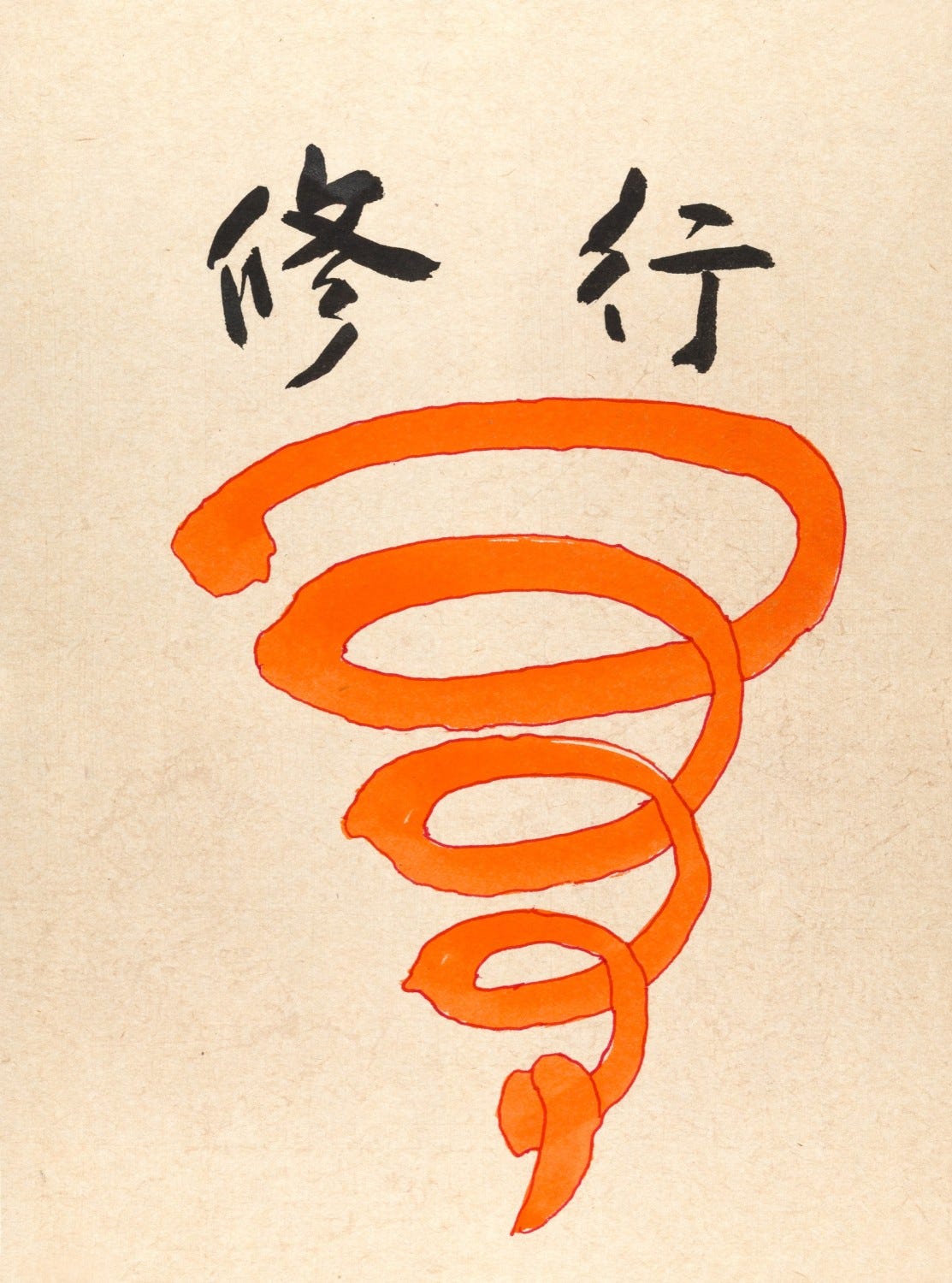
Forge opens with Shugyo 修行, before the chapter Practise Deliberately. The dictionary gives training, practice, discipline and study, with ascetic practices as the Buddhist sense. I describe Shugyo as rigorous, intentional practice undertaken for transformation, the work that tempers capability through repetition and constraint in martial arts and Zen traditions.
My reading of 修行 then was “repetition replaces motivation”. Forge turns intent into capability, and precision and rhythm count for more than intensity.
我慢, Gaman, the Persist phase
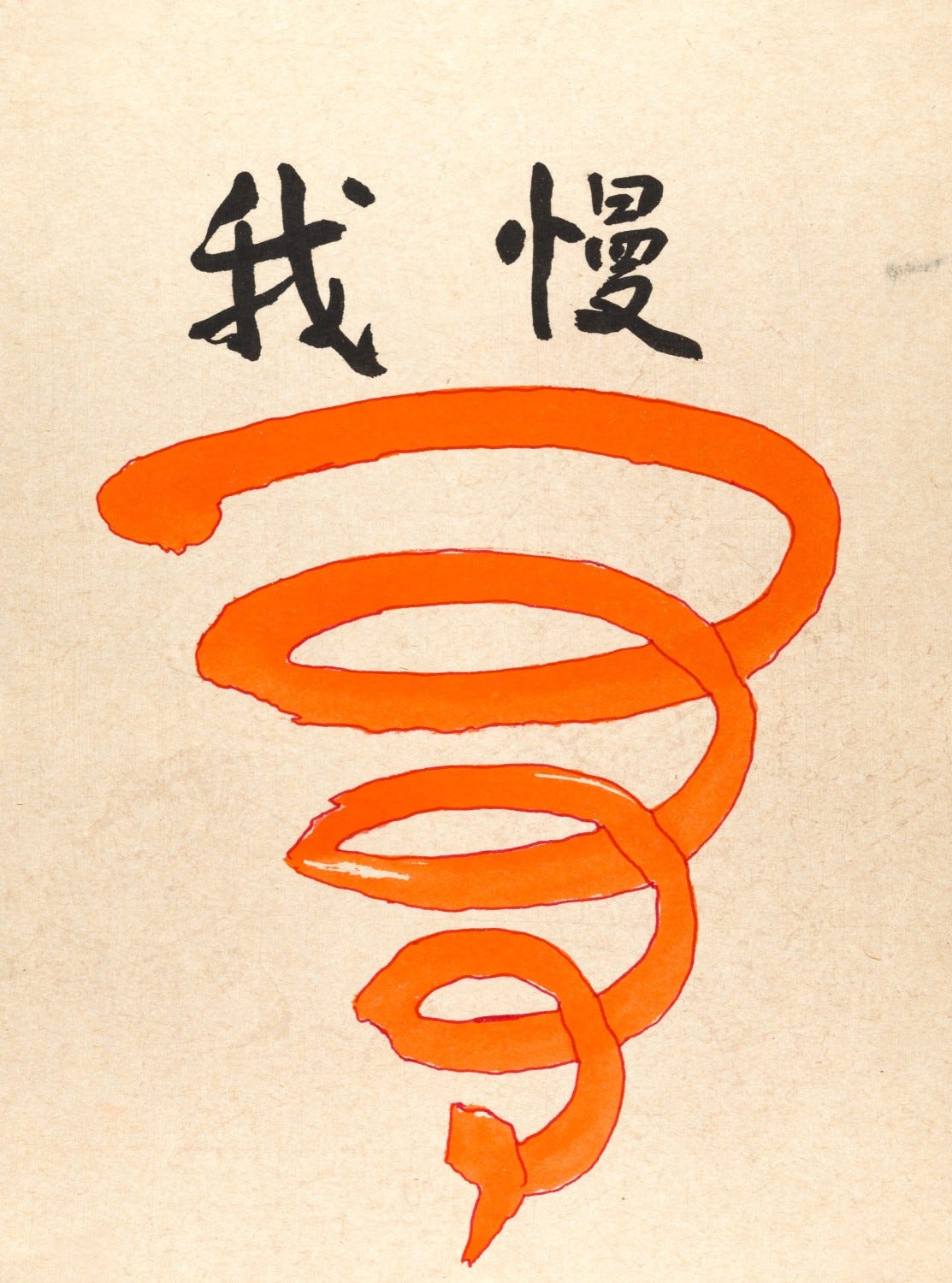
Gaman, 我慢, comes before the Persist chapter, Endure Friction. Its dictionary senses are endurance, patience, perseverance and bearing with something, then self-control and self-restraint. My book describes Gaman as the capacity to endure difficulty without complaint or dramatisation.
In March I paired this work with “pressure and persistence”. Persist is also where AHA, pronounced A-hey, works in flight. When a signal fires, the work pauses on one question, adjust, hold or abort, and hold means holding the line at the load already authorised. Gaman amplifies or modulates what Forge has shaped, and Ishi governs it through AHA.
反省, Hansei, the Reflect phase
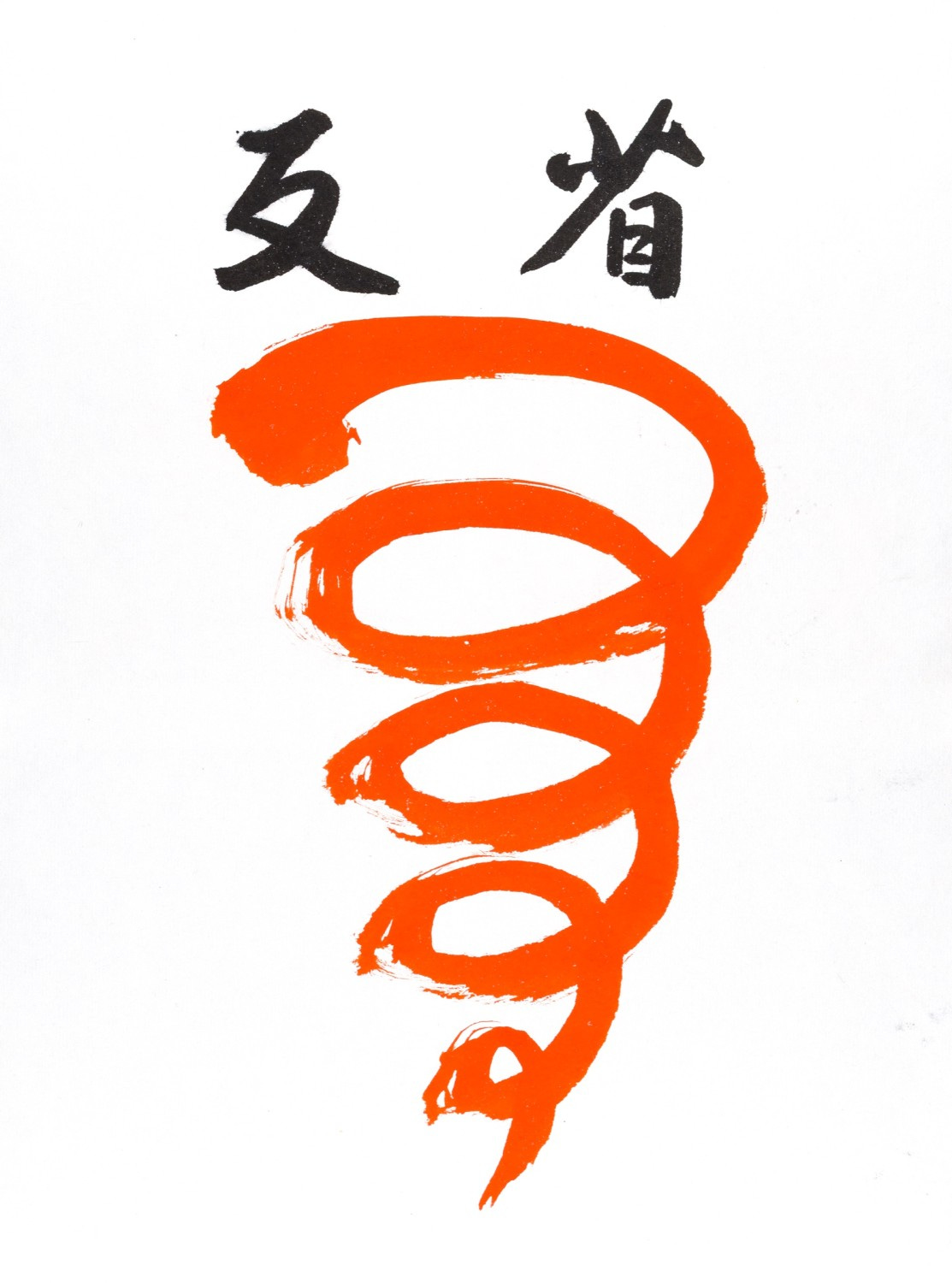
Reflect, the chapter called Recalibrate, opens with Hansei, 反省. Its dictionary senses run from reflection, reconsideration, introspection and contemplation to regret and remorse. Hansei, as I use it, is structured reflection focused on learning, and in Japanese organisations it follows both success and failure.
Its reading in March was “awareness of the whole”. Hansei runs alongside the work as monitoring, and at a horizon it ends in recommit, pivot or release.
看脚下, Kan Kyakka
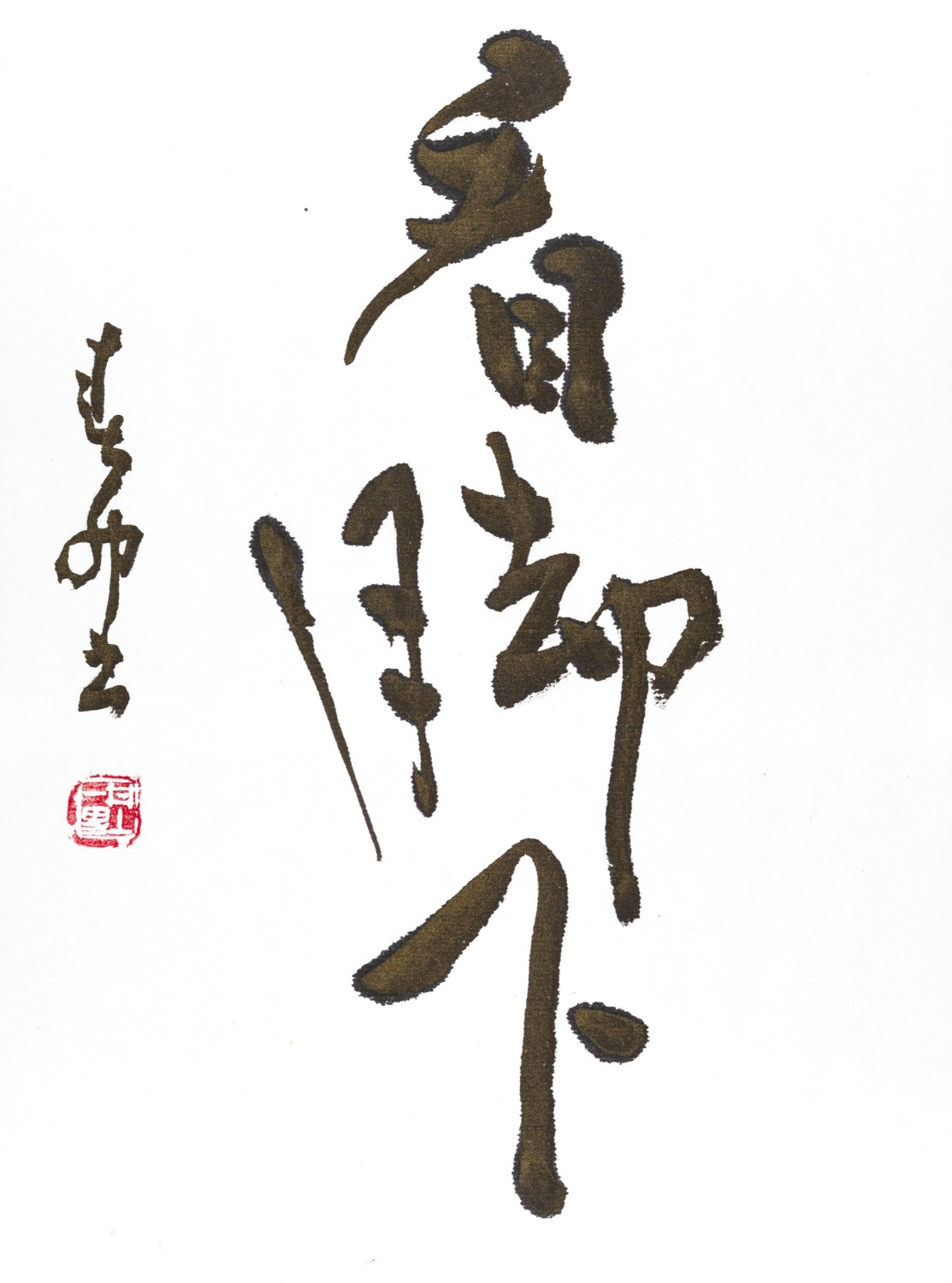
Part IV, the 6 case studies of failure, is preceded by 看脚下, Kan Kyakka. 脚下 means at one’s feet and 看 is to watch over or see, so the work asks you to look where you stand. The dictionary lists a related 4-character expression on the same 2 characters, glossed as looking carefully where your own footsteps fall and knowing yourself.
I put it there as a warning to look beneath your own feet before judging what went wrong for someone else. Last week’s Weekly Ishi, When the Spiral Breaks, used it to introduce HMNZS Manawanui, Bonza, American Apparel, Wirecard, Kodak and HMS Artemis.
洗心, Senshin
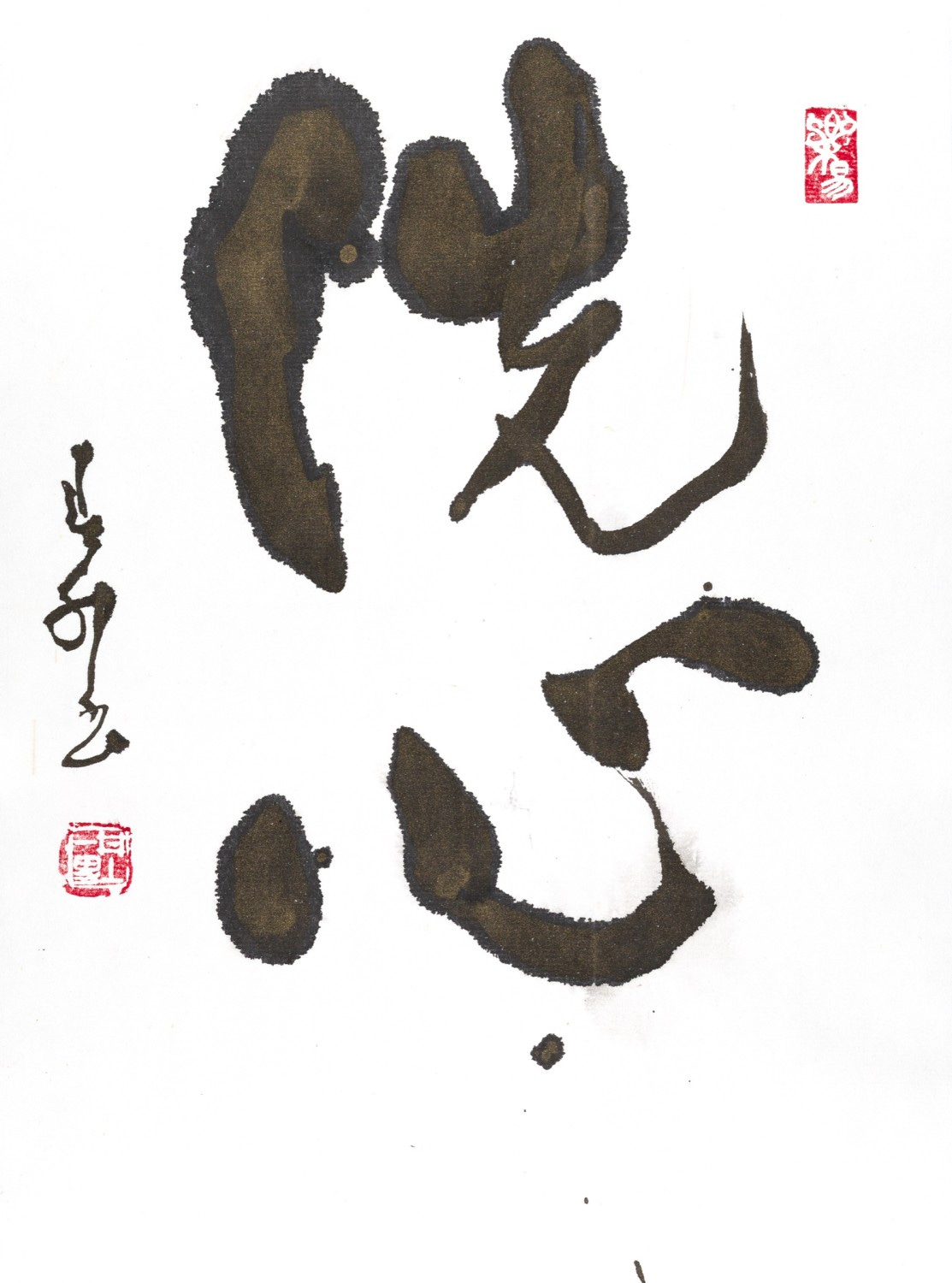
Senshin, 洗心, introduces Ishi in Action, where my book moves from philosophy to practice. Read character by character, 洗 is to wash and 心 is heart or mind. I placed it there to signal the need to clear the mind before that move, opposite a line after Musashi: live the way you fight, and fight the way you live.
改善, Kaizen
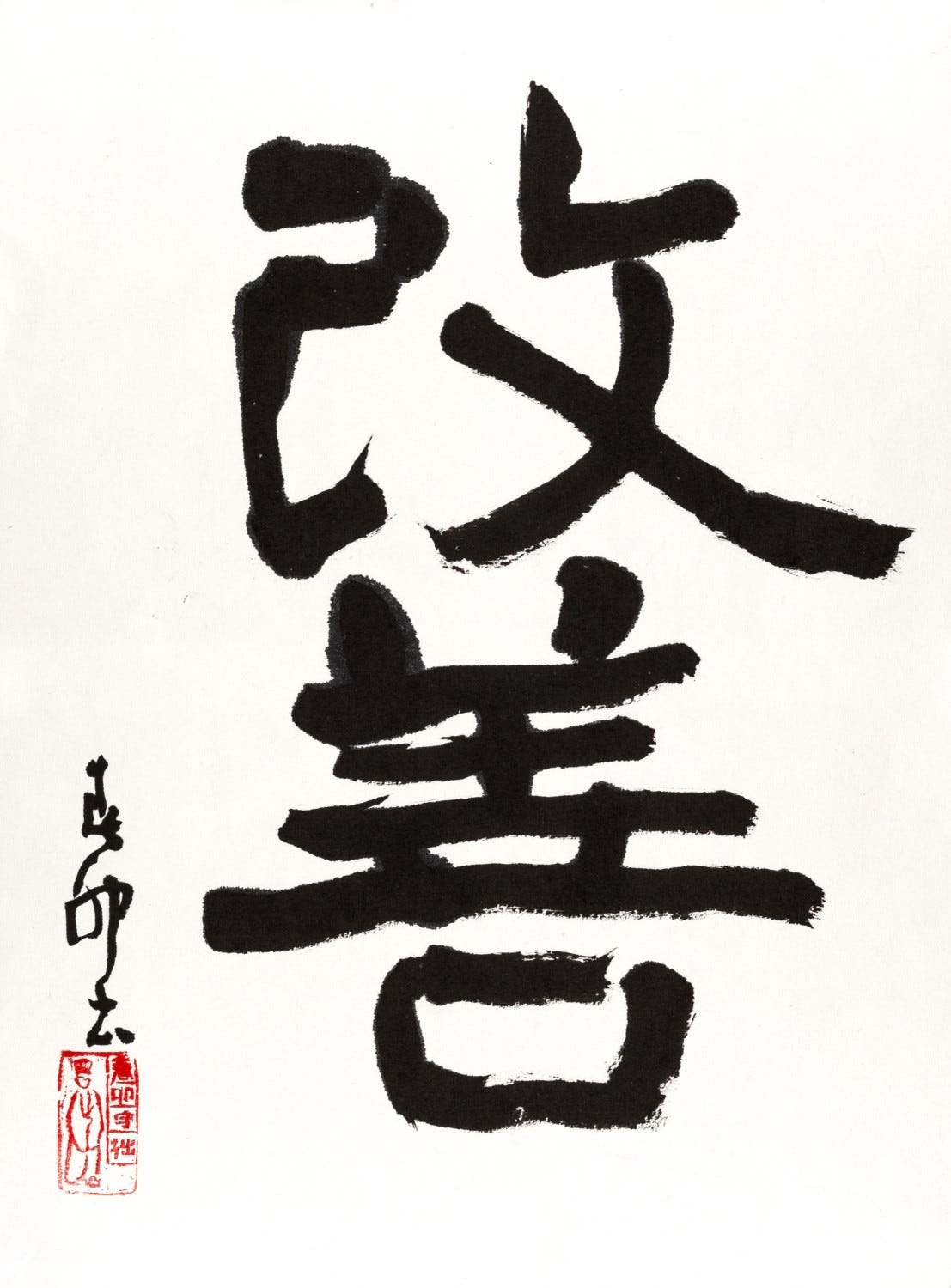
My book ends on kaizen, 改善, alone on the final page after the index. In the dictionary it means betterment and improvement, and also the Japanese business philosophy of continuous improvement. I define Kaizen as change for the better, small and incremental improvement applied consistently. Ikigai gives purpose, Kaizen refines progress, and Ishi governs the bridge between the 2.
Its discipline, as I wrote it, lies in humility. It assumes today’s approach can be improved, and that improvement begins with your own practice.
The ensō
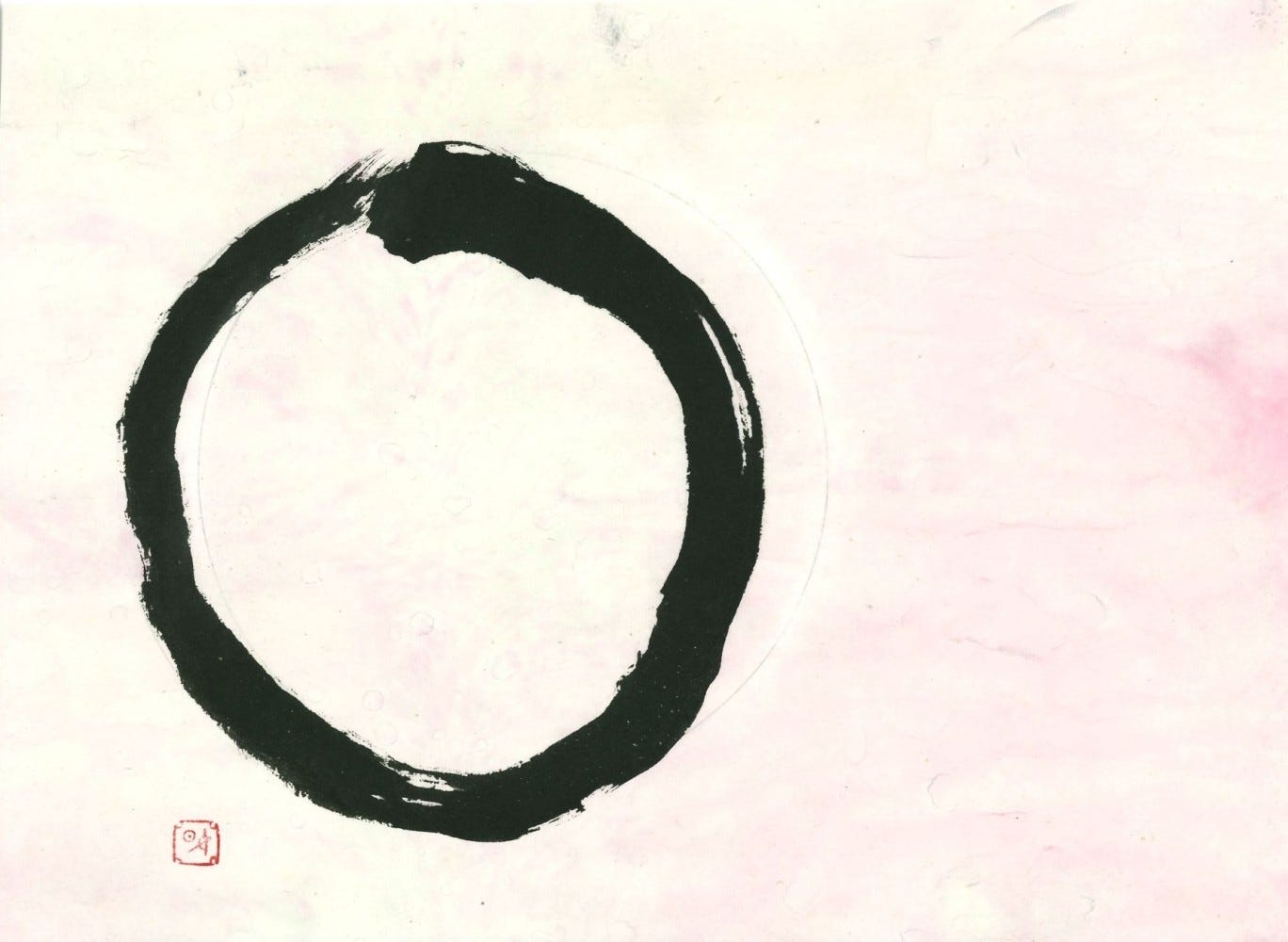
The ensō is the one piece here with no characters to translate, and my book does not include it. In Zen practice it is the single circular brushstroke, painted as a meditation and an acceptance of imperfection. When the cover was taking shape in January, I wrote that the red form was inspired by it, “a traditional Zen brushstroke drawn in one breath”.
Late in the writing I realised that Ishi is a progression of ensō, a spiral formed from repeated cycles, each one slightly different. Where the ensō captures a moment, the spiral shows a practice that keeps unfolding. Mine keeps the brush and the imperfection, looping round and needing a new breath each time.
Yesterday’s 55, which became 40
Yesterday was my 55th birthday, and I set out to run 55 kilometres. I stopped at 40. The day was hot, I started to falter, and struggling in the heat was the abort condition I had set before I left.
The start was not the one I planned. My wife had an emergency dental appointment in Auckland, so the farm chores fell to me before I could run. Yesterday’s article went live at my halfway point and said that pulling out would end the run, not the commitment to February.
That is how it played out. The Kepler on 5 December is happening, even if I crawl to the finish. The Coast to Coast in February is still on, and if need be I will switch from the Longest Day to the 2-day race, which I am more than capable of finishing. That would be an Adjust, and I will make the call in January. I would still prefer to fail at an audacious goal than achieve a relatively conservative one - however I owe it to my support crew to actually make it to New Brighton and get a selfie with Steve Gurney this time.
This Substack, rebuilt
At the weekend I rebuilt this Substack. The archive now has an open section and a paid section, and each paid post shows a preview before the paywall. I tidied the titles and series names across the archive, and took 50 older posts back to draft without deleting any.
Readers subscribed at the cut-off have a complimentary paid year, and Chat is now for paid subscribers. Kettei, my writing on intent held by more than one person, has its own publication at
What changes from Friday
This is the last Tuesday issue of Weekly Ishi. From Friday 23 October the Weekly Ishi Digest is the week’s one Ishi email, with a link to each of that week’s 5 articles. Digest 1, The Commitment You Chose, goes out this Friday and gathers the first week, starting with yesterday’s birthday article.
Since yesterday, Monday 19 October an article will go up on the web each weekday, without an email, and the run continues for 10 weeks to Christmas Day. The first few are open to everyone, and most of the rest will be in the paid section.
The first 6 weekly themes follow the Spiral: understanding it whole, a decision strong enough to act on, capability forged through practice and correction, persistence with judgement, drift seen before it becomes your normal and reflection that takes the learning forward. Four Samurai stories run through the 10 weeks, and so does my own record, with the failures kept in.
After those 6 come the mind doing the work, the same discipline in different lives, the intellectual foundations of Ishi and, to close, completion and the next edition. This edition and each Friday digest stay open to everyone, and paid subscribers also get Chat, a direct line to me.
First published on Substack: read Weekly Ishi 18: The Shodō Behind Ishi on Substack.