Weekly Ishi 13 October 2026
Weekly Ishi 17: When the Spiral Breaks
The 6 case studies from Ishi: The Discipline of Determined Intent, each read through the Spiral, and what each one teaches about drift.
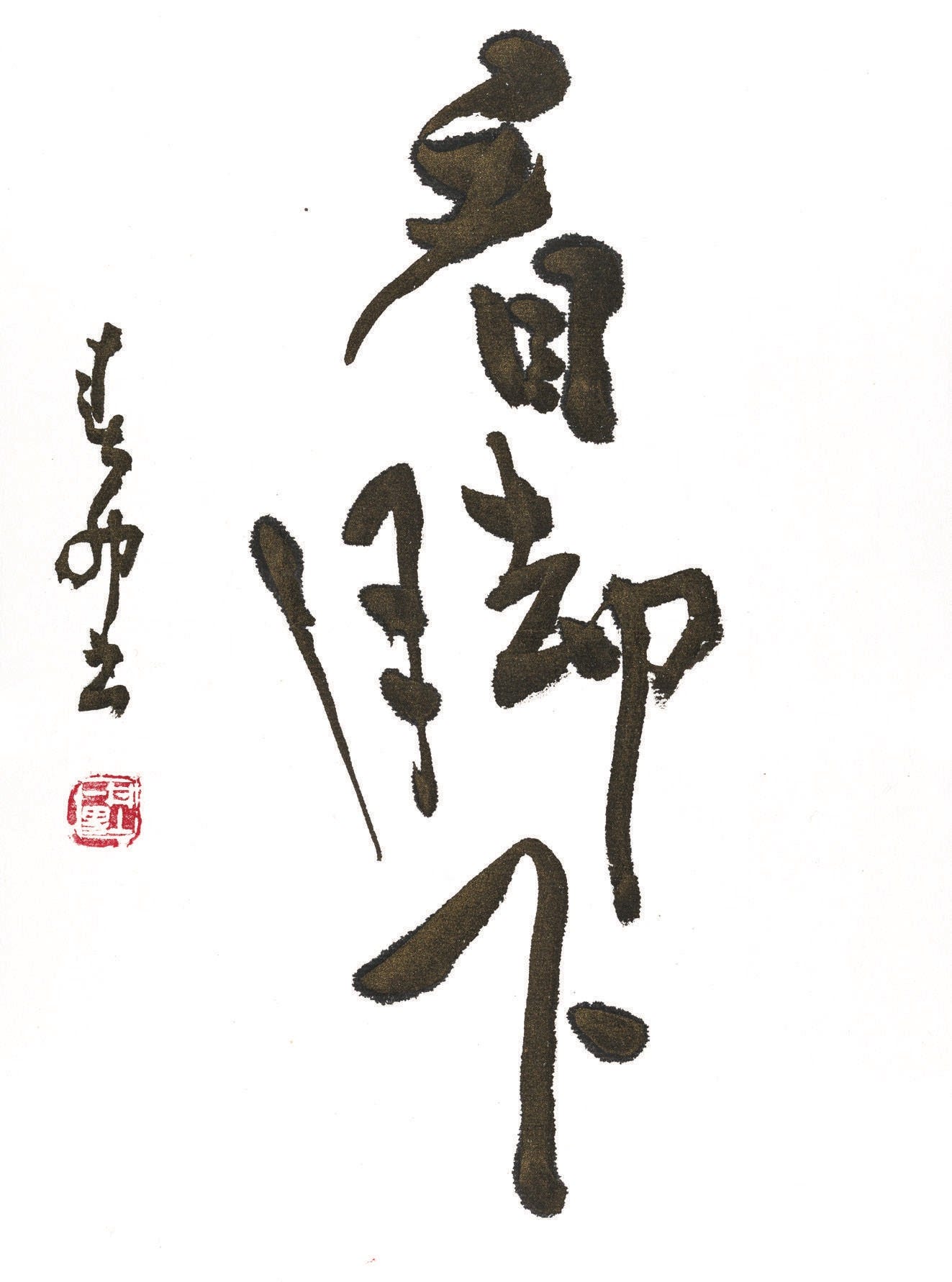
Calligraphy: Inoue Shunbō, Imabari City, Japan.
Part IV of Ishi: The Discipline of Determined Intent moves out of theory and into real life. It opens with an epigraph attributed to Matsura Seizan.
“There may be mysterious victories. There are no mysterious failures.”
勝ちに不思議の勝ちあり、負けに不思議の負けなし
Kachi ni fushigi no kachi ari, make ni fushigi no make nashi.
Before the case studies is a piece of calligraphy, 脚下 (Kyakka), look beneath your feet. I put it there as a warning to look at your own footing before judging what went wrong for someone else.
The 6 cases are HMNZS Manawanui, Bonza Aviation, American Apparel, Wirecard, Kodak and HMS Artemis. In each, capable people working inside accepted standards drifted into failure because one or more phases of the Spiral went missing or became corrupted. The purpose is pattern recognition. Organisational failures are loud, and reports, timelines and consequences make drift easy to see. The lens stays personal self-governance, because the same erosion happens inside a single life, where it is still correctable.
HMNZS Manawanui, 2024
Dominant failure: Shugyo. Practice decayed into routine, persistence ran on without vigilance, and reflection came after the ship was on the seabed.
In October 2024 the Royal New Zealand Navy’s dive and hydrographic vessel HMNZS Manawanui ran aground on a reef off Samoa and later sank. The 75 people on board were evacuated with no fatalities, though some were injured and the ship was lost. The Court of Inquiry, which reported in April 2025, traced a chain of small failures through the watch rather than one decisive error. Autopilot stayed engaged when manual control was required, and course corrections made through the thruster controls had no effect while it did.
The inquiry also found conditions that pre-dated that night. The commanding officer did not hold the platform endorsement the New Zealand Manual of Navigation requires for command of the vessel, the ship was not cleared for the survey task it was performing, and around 20 key positions on board had personnel deficiencies. During the evacuation, tow lines broke repeatedly because the procedure and the anchor points had not been established in training.
Procedures were followed in form while the purpose behind each one went unexamined in real time. That is the erosion of Shugyo, where practice stops sharpening awareness and becomes the rehearsal of habit. Gaman depends on Shugyo to renew attention, so persistence ran on without vigilance. The endorsement gap, the unrehearsed evacuation and the uncleared task were knowable in advance and recoverable through honest review, and Hansei postponed until after failure becomes documentation. Charges were laid against 3 officers in March 2026 and the court martial was still under way when Ishi went to print, so any judgement about individuals here is provisional.
Bonza Aviation, 2021 to 2024
Dominant failure: Gaman without Hansei. Genuine intent lifted the aircraft, and the endurance and mid-flight reflection to keep the airline flying were missing.
Bonza launched in October 2021 promising to connect regional Australia to itself, bypassing the hubs and restoring routes the large carriers had abandoned. The brand was informal, optimistic and anti-corporate, and it resonated in communities that felt forgotten. Commercial flights began on 31 January 2023 with a route map that assumed demand would grow because flights were offered.
Thin regional corridors require careful pacing, local partnerships and margin discipline. Aircraft deliveries slipped, schedules shifted and customer communication fractured, and Bonza treated those signals as noise and kept projecting momentum. By late 2023 costs had risen, funding had tightened and reliance on a single overseas investor had become a constraint. Aircraft were repossessed, routes were cut, and public messaging moved towards reassurance rather than adjustment.
The missing piece was a decisive pause to slow the expansion, renegotiate the funding and reset route economics to cash reality. Optimism crowded out dissent, and warning signs were reframed as negativity. Bonza went into voluntary administration in April 2024, and reflection followed the collapse. Markets apply pressure constantly, and endurance depends on noticing when the pressure is changing shape.
American Apparel, 1989 to 2016
Dominant failure: Gaman without boundaries. The company burned out under ungoverned intensity.
Dov Charney founded American Apparel in 1989 around a personal mission: manufacture in the United States, pay higher wages, and reject polish and hierarchy in favour of rawness and provocation. Through the 2000s it expanded rapidly and became a symbol of anti-corporate fashion. Customers responded to the conviction, and employees rallied to the purpose.
Containment did not keep pace with growth. Decisions stayed concentrated around the founder, who became the bottleneck, and endurance became an identity rather than a capacity. When pressure rose, the response was to push harder. By the early 2010s the company was heavily leveraged, suppliers went unpaid and stores were overextended. Charney faced allegations of misconduct, which he denies, and the board dismissed him. Mission and personality had fused, leaving little room for correction short of an existential threat.
Ryan Holiday, who led marketing in the later years, describes an organisation unable to slow down without feeling it was betraying itself, where restraint read as a loss of belief and reflection felt like surrender. American Apparel entered bankruptcy in 2015 and again in 2016, and the mission dissolved. Some systems fail by falling asleep, and others fail by refusing to rest. In personal life this second pattern is more common than slow drift: purpose stays clear while capacity drains away.
Wirecard, to 2020
Dominant failure: Hansei actively resisted. Persistence preserved the narrative while integrity drained out of the system.
In June 2020 Wirecard admitted that €1.9 billion recorded on its balance sheet did not exist, and within days it was insolvent. Its chief executive was arrested. The collapse looked sudden, though the system had been decaying for years while reporting growth.
Wirecard fitted a story Germany wanted to believe, a home-grown fintech able to challenge the American payment giants, and its entry to the DAX in 2018 made it a symbol of national technological maturity. That symbolism softened scrutiny at the moment scrutiny was required. Controls grew more complex rather than more transparent, offshore structures multiplied, and each workaround was defensible on its own. Inside, critics were isolated and loyalty was rewarded over curiosity. Outside, critics were dismissed as short-sellers, and investigative journalism met legal intimidation.
When allegations surfaced, leadership answered with denial and counterattack. Auditors signed off accounts without verifying cash, regulators pursued journalists and restricted short-selling, and supervisory boards accepted reassurance over evidence. Trustee confirmations went unchallenged while reported cash grew implausibly large. Where American Apparel burned itself out through excess, Wirecard preserved itself through deception, and both show momentum without awareness ending in collapse.
Kodak, to 2012
Dominant failure: the link between Ishi and Hansei broke. Kodak refined execution without revisiting whether the original intent still held.
By the 1980s Kodak was an exemplar of operational excellence. Defect rates fell, yields improved and film production became exceptionally efficient. Digital photography then moved from laboratory curiosity to consumer reality, and Kodak kept refining film with increasing precision. Engineers studied results and iterated exactly as trained, while the more dangerous question, whether film was still the right system to optimise, went without sustained attention.
The failure was one of attention and posture. Kodak pioneered digital photography and understood the trajectory early. Clayton Christensen’s The Innovator’s Dilemma explains why this feels rational from inside a successful firm: resources flow to what serves current customers and current metrics, so discipline itself becomes the trap. Success reinforced confidence rather than curiosity, and operational excellence became a machine for accelerating yesterday.
By the time reflection came, market share had collapsed and strategic options had narrowed, and Kodak filed for bankruptcy in 2012. It lacked the habit of returning to purpose while success still made that uncomfortable. Kodak refined itself into irrelevance.
HMS Artemis, 1971
Dominant failure: Shugyo turned ceremonial. Routine replaced vigilance, and a submarine sank alongside the jetty.
In July 1971 HMS Artemis, a Royal Navy Amphion class submarine, sank at her moorings at HMS Dolphin in Gosport, within sight of the submarine escape training tower. Three men trapped forward later escaped. I was born that year and joined the Royal Navy as an engineering apprentice 19 years later, and throughout my service Artemis was cited in training as the reference case for how competence fails when attention drifts.
The Board of Inquiry found no material defect and no structural weakness. An after hatch was left open, shore power cables were routed so the hatch could not be closed, trim was poorly managed, and watertight integrity went unverified. The watchkeepers were present, experienced and busy, and each action made sense in isolation. The inquiry put the loss down to basic standards of submarine practice slipping across the board, not to equipment.
Standards had faded into background noise, and activity created the appearance of control while awareness decayed. After Artemis the Navy rewrote training, reinforced watchkeeping and formalised shore evolutions, and in my time rotation between boats was mandatory to prevent wilful blindness. Fresh eyes notice what experienced ones have learned to ignore. Awareness is a practice, and when it fades, even a safe harbour becomes dangerous.
Drift is stealthy
Taken together, the cases show failure coming from gradual misalignment. The people involved were intelligent and trained, and the work seemed reasonable at the time. The Spiral does not prevent failure. It exposes decay early enough to act, and that is the difference between correction and collapse. Look beneath your own feet first.
Ishi: The Discipline of Determined Intent is on Amazon:
https://www.amazon.com/dp/1067285512
References
HMNZS Manawanui. New Zealand Defence Force. (2025). Court of Inquiry into the grounding and loss of HMNZS Manawanui: Record of proceedings. Convened by RADM Garin Golding, Chief of Navy. Reason, J. (1997). Managing the risks of organizational accidents. Ashgate.
Bonza Aviation. Australian Securities and Investments Commission. (2024). Bonza Aviation Pty Ltd: Voluntary administration filings. Australian Financial Review. (2024). Bonza’s ambitious low-cost model runs out of runway. Centre for Aviation (CAPA). (2023 to 2024). Bonza Aviation: Structural challenges in Australia’s regional low-cost market.
American Apparel. In re American Apparel, Inc., Case No. 15-12055, U.S. Bankruptcy Court, Central District of California, 2015, and Case No. 16-12551, U.S. Bankruptcy Court, District of Delaware, 2016. Bhasin, K. (2015, 25 February). Inside American Apparel’s meltdown. Business Insider. Holiday, R. (2022). Discipline is Destiny: The power of self-control. Portfolio.
Wirecard. Deutscher Bundestag. (2021). Final report of the Parliamentary Committee of Inquiry on the Wirecard Scandal. McCrum, D. (2020 to 2022). The Wirecard files. Financial Times. Storbeck, O., and Arnold, M. (2020). How Wirecard’s fraud went unchecked for years. Financial Times.
Kodak. In re Eastman Kodak Company, Case No. 12-10202, U.S. Bankruptcy Court, Southern District of New York, 2012. Bower, J. L., and Christensen, C. M. (1995, January to February). Disruptive technologies: Catching the wave. Harvard Business Review. Christensen, C. M. (1997). The innovator’s dilemma. Harvard Business School Press.
HMS Artemis. UK National Archives and Royal Navy. (1971). Board of Inquiry summary: HMS Artemis. Kemp, P. (1997). “A wholly avoidable accident: HMS Artemis.” Naval Submarine League Archives. Parry, D. (2022). Perisher: Its evolution 1917 to 2017 and the submarine commanding officer [PhD thesis, King’s College London].
First published on Substack: read Weekly Ishi 17: When the Spiral Breaks on Substack.