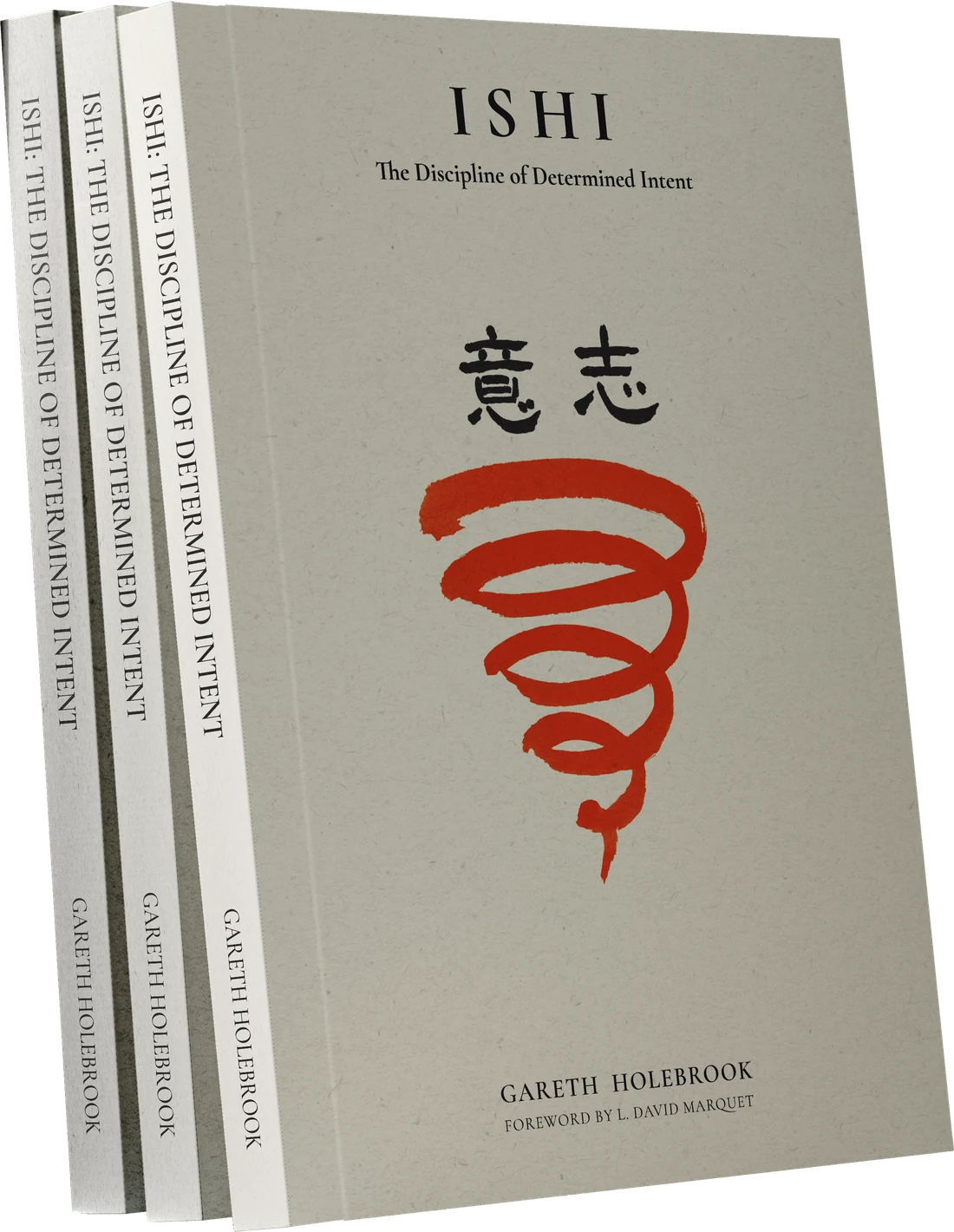
Weekly Ishi 6 November 2026
Weekly Ishi 21: A Standard Outside Yourself
Ishi Weekly Digest. November 6 2026.

My front stance feels balanced, and the weight is too far back. I know the second half of that sentence because my sensei, Karl Naoroji, can see it. The correction is a few centimetres, and years of my own self-observation had not found it.
The pool showed me the same thing on a screen. Haydn Woolley, a former elite swimmer, coaches me one to one with video, and faults that had crept in over years showed up brutally, a crossed arm in the catch and a dropped elbow. Fixing those faults has meant slowing down, “sometimes losing speed entirely”, while the new shapes settle.
Both faults felt normal from the inside, and something outside me found each one. This week’s 5 articles were about Forge, the phase where a commitment meets the work, and about the standard a practice needs from outside the person doing it.
How the week ended
This was the third week of Ishi in Practice, the series of articles for paid subscribers that runs each weekday until Christmas. The first week covered the whole Spiral and the second stayed with Decide, or Ishi. This week moved to Forge, or Shugyo, where the work starts answering back.
I took the examples from the pool, the dojo, a river and the writing desk. In each one the judge of the practice was outside the person doing it, whether a camera, a sensei, a single breath or a cut-off on the river.
Your one decision this week
Choose one standard outside yourself for your next session on the commitment you chose for these articles. It might be a camera, a coach, a timer or reading the work aloud, as long as it can disagree with your own sense of how the session went.
After the session, write 2 lines, one on what worked and one on what needs adjustment. My book’s plateau rule applies here. If 3 entries in a row record no change, pause and redesign the practice before the next block, because more hours on an unchanged method would pay for the plateau with fatigue.
The 5 articles
Monday: The First Repetition Talks Back

Control engineers call the force that holds a still object in place stiction, a term drilled into me as a Weapons Engineering Artificer in the Royal Navy. The article follows the first swim back of a season and my return to karate after Kona in 2022, to show what only the work can report, and why an unwelcome first repetition is rarely a reason to reopen the commitment.
Read it here: https://ishidodi.substack.com/p/the-first-repetition-talks-back
Tuesday: Ready on Paper

In the 2025 Coast to Coast Longest Day I ran strongly, then capsized 3 times on a low Waimakariri and missed the cut-off by 5 minutes. The article separates the distance a training log records from the conditions that decide the day, and closes on a one-line rule I wrote at the end of my last Ironman cycle.
Read it here: https://ishidodi.substack.com/p/ready-on-paper
Wednesday: The Stance That Felt Balanced
Beyond the stance and the camera, the article follows a fault that turned up in 2 places at once, my left hand in the pool and my right foot in karate, and a single-arm drill I steered around for years. It explains why familiar form feels right whether or not it is, and why a real correction can feel like going backwards.
Read it here: https://ishidodi.substack.com/p/the-stance-that-felt-balanced
Thursday: Three Repetitions and a Pause
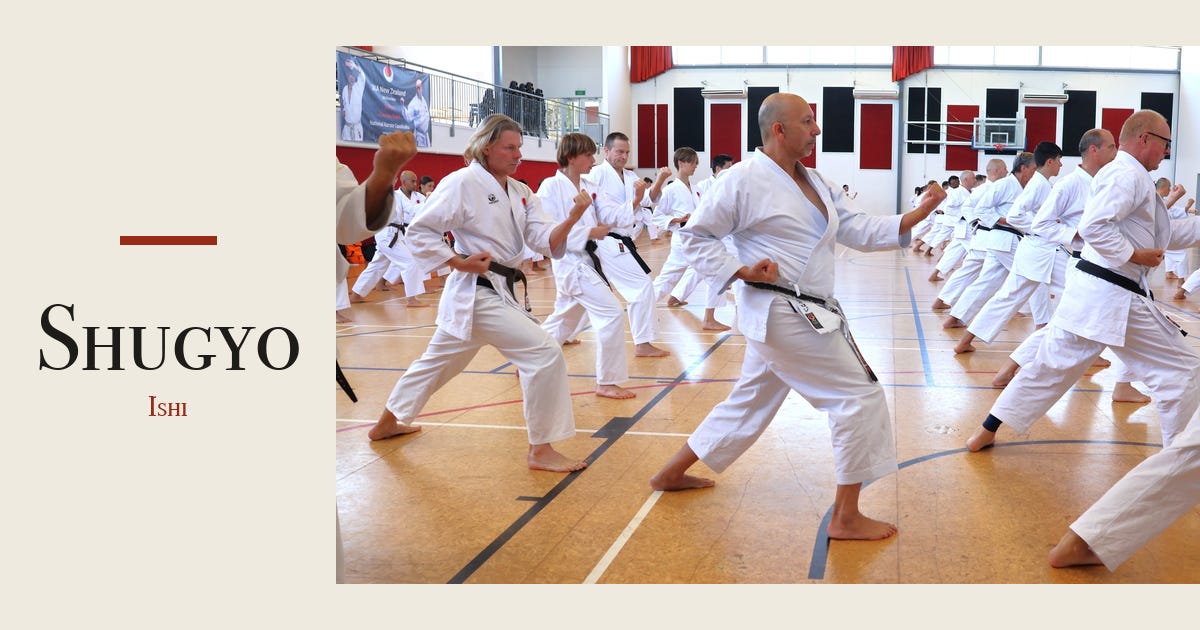
The article reads the 1993 deliberate practice paper for what it found, and for what the 10,000-hour shortcut lost when the figure travelled on its own. It ends in the dojo, on a November evening in 2025 when I rehearsed the error, and on the pause where each repetition gets checked against the standard.
Read it here: https://ishidodi.substack.com/p/three-repetitions-and-a-pause
Today: Design the Practice for Your Worst Day

My book sets one test for a practice before any other, that it is “easy to start, hard to overextend and small enough to complete even on a difficult day.” The article works one example through field by field, the 14 spoken-first scripts I wrote over 14 days in 2025, and places it in Shu-ha-ri, a Japanese description of how a student learns a form.
Read it here: https://ishidodi.substack.com/p/design-the-practice-for-your-worst
The Spiral in a paragraph
The Spiral has 4 phases. Decide, or Ishi, sets the commitment, its horizon and the conditions under which it ends. Forge, or Shugyo, turns the commitment into capability through practice that is corrected and repeated. Persist, or Gaman, holds effort steady under load, governed in flight by the AHA (pronounced A-Hey) responses, Adjust, Hold and Abort, declared in advance. Reflect, or Hansei, monitors while the work runs and reckons at the horizon, where the verdict is to recommit, pivot or release.
One observation from the week
Effort is the easiest thing to put in place of a correction. I have seen a pool session designed to correct one stroke fault turn into hard intervals, because the correction felt awkward and the intervals felt productive. The watch showed impressive splits, and the fault was untouched.
One November evening in 2025 I did the dojo version. I got to the dojo late after a 2-hour drive through heavy weather, my sensei corrected me once kata began, and I tried harder and made more mistakes. Both times effort stood in for the correction, and the fault came out of the session intact. A standard outside the person practising tells the 2 apart, because from the inside both feel like work.
I invite you to read the 5 articles in full as a paid subscriber of Ishi, at https://ishidodi.substack.com
First published on Substack: read Weekly Ishi 21: A Standard Outside Yourself on Substack.