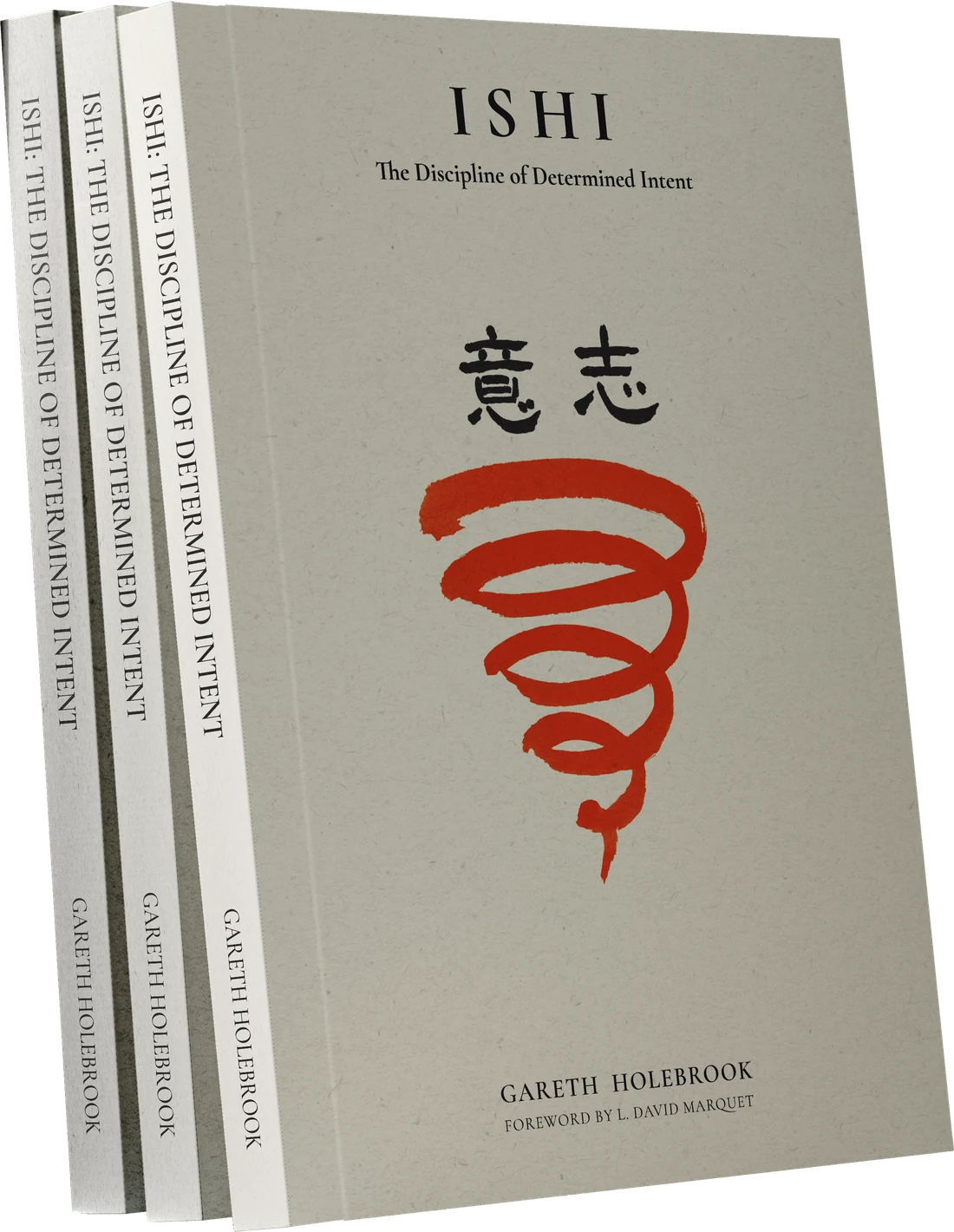
Weekly Ishi 6 October 2026
Weekly Ishi 16: Kettei, When the Intent Is Held by More Than One Person
I have spent much of this year finishing Ishi: The Discipline of Determined Intent. Since February I have also been working behind the scenes on a second question: how this discipline of self-governance applies inside an organisation, when the intent is held by more than one person.
The project started as a crossover. I wanted to know how what I had learned in Ironman applied at work, and in particular in the lean and agile coaching I have been involved in since about 2011. The writing kept growing over the past few years, and about a year ago it passed 100,000 words, far too heavy for one volume. So I took the decision to split it. Ishiwould focus on personal self-governance and nothing else. Kaizen of the Day would sit in between as the companion, a palate cleanser. The third book would apply the discipline at scale.
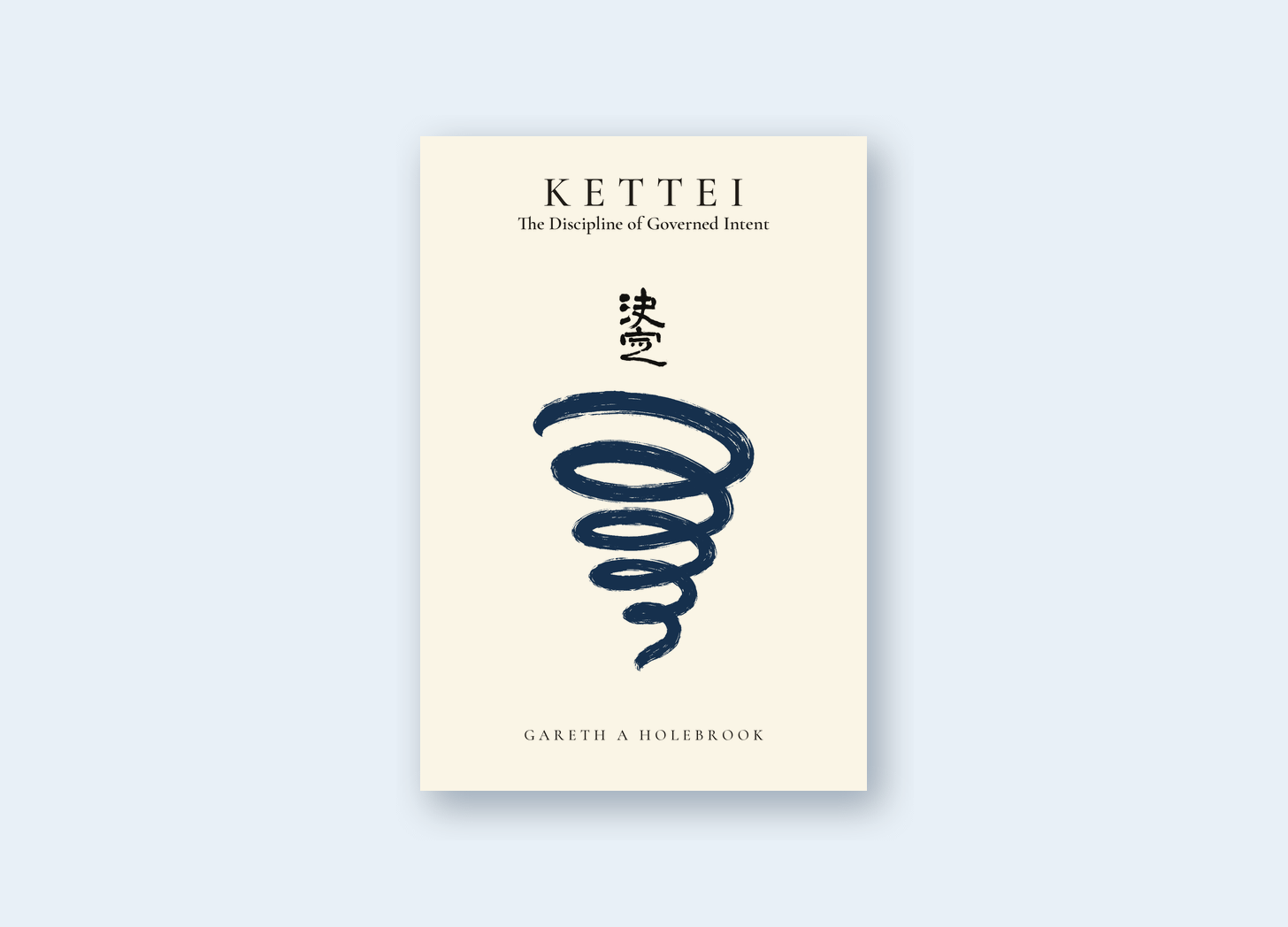
That third book is Kettei: The Discipline of Governed Intent.
Deep research over these months has shown me that the same patterns and failure modes we observe and experience personally are amplified in the workplace. Against the 4 phases of the Spiral, the picture looks like this.
Decide. Poor decisions, made slowly, rarely reviewed and never governed.
Forge. Deliberate practice close to absent.
Persist. Persistence running either too hot or too cold. The Goldilocks point comes from governing the decision pre-emptively and prospectively, at the moment it is made.
Reflect. Reflection distorted by politics and agendas, by cognitive bias and by an absence of psychological safety.
Ishi governs; kettei is governed. Ishi is the intent you set and hold yourself to. Kettei, the decision, is what an organisation has to govern once that intent is shared by several people over time, even when the owner of the decision stays the same. When I announced Kettei in September I put it this way: Ishi cards work when the intent remains inside one skull. The organisational counterpart of the Ishi Card is the Kettei Watchcard, the instrument that governs a decision across the people who share it.
From the case studies and my own experience I have identified 16 specific failure modes, and I have built an extension of the Ishi Spiral that takes those failure modes into account. The primary principle is DAAGO, the decision as a governable object. A consequential decision becomes a first-class object, and before it can become active it has to hold 7 properties: an owner, a lifecycle state, reversibility, a validity boundary, scope and exclusion, coupling dependency and abort criteria. As in the Ishi Spiral, AHA (adjust, hold or abort) is at the centre as the governance practice.
The case studies open with the 737 MAX and go on to Ajax, Silicon Valley Bank, Meta’s Reality Labs, Novopay here in New Zealand, Horizon in the UK, Queensland Health and the Space Shuttle Columbia, with my own experience at Sony alongside. Government procurement projects are disproportionately represented. Read into that what you will.
Kettei: The Discipline of Governed Intent launches on Leanpub this month, with the paperback to follow next year. Alongside it I am drip-feeding the case studies and concepts on Substack, in a publication of its own. The plan runs for 12 weeks through case studies, principles, tools and proposals, and I will be posting there regularly for the rest of this year.
Ishi continues here. Kettei has its own home.
Subscribe at https://kettei.substack.com
First published on Substack: read Weekly Ishi 16: Kettei, When the Intent Is Held by More Than One Person on Substack.