Weekly Ishi 15 July 2026
Weekly Ishi 5: Choose Your Hard
The Hard Thing and the Exit.
Last week I fasted for 5 days. I posted the Ishi Card I filled in before it started, and a short note when it ended. What I have not written yet is the pair of questions underneath the whole exercise. Why choose something that hard at all? And who decides when it stops?
The first question has good answers, and Grant Schofield gave me his. The second question decides whether the hard thing builds you or breaks you. Chosen hardship is useful only when it is governed in advance, and governance is the part the motivation industry leaves out.
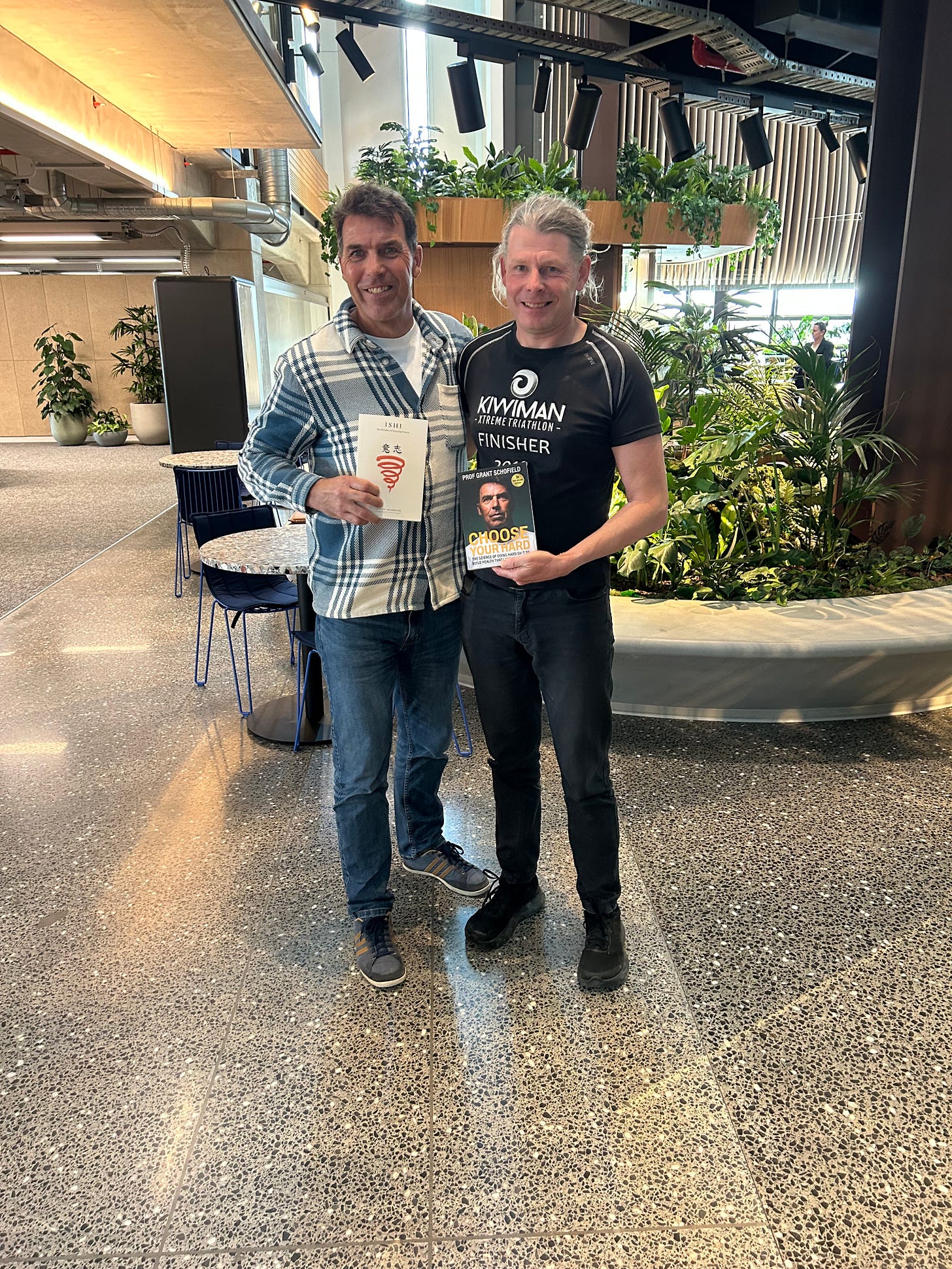
I put both questions to Professor Grant Schofield when I interviewed him for the North Harbour Tri Club podcast, Behind the Athlete. Grant is a professor of public health, with 30 years at Auckland University of Technology, 6 best-selling books and hundreds of peer-reviewed papers behind him. He has been a member of our club since the early 1990s, and he completed Ironman New Zealand in March, in his late 50s. His new book is ‘Choose Your Hard’, and I read it a few weeks ago. The first of its 7 principles he calls Move or Rust. The body improves under stress combined with recovery, a process called hormesis, and the payoff reaches well past fitness for its own sake. Move or Rust is about adding years to life and, more than that, adding life to those years: improving healthspan so the terminal decade remains meaningful, capable and healthy. He puts it this way: a medicine with that record would be the best-selling medicine of all time.
One line of his is about friction. Create friction in your life on your own terms, he argues, through fitness, through food, through chosen challenges, and the friction builds you. Skip that and friction finds you anyway, as chronic disease or as circumstance, and it comes on terms you never chose. Every path has difficulty in it somewhere. Choosing yours on purpose is what he means by choosing your hard.
The second idea he calls the dopamine economy, and he offers it as deliberate shorthand rather than a settled account of the neuroscience. Stack easy pleasure on easy pleasure, he argues, and the reward baseline sinks until ordinary life reads as pain. Put the uncomfortable thing first and the baseline lifts and holds. Cold water, a training session, a fast: on Grant’s seesaw, the order of pain and pleasure decides which way your days tip. His one-line version: pain first causes pleasure, and pleasure first causes pain.
That is the ground misogi stands on. The word comes from Japanese Shinto, where it names a purification rite, and the modern borrowing is thinner than the original. I do not claim the full Japanese history. Grant’s book gave me a word for something I have done every year since 2004: one hard thing, chosen on purpose. Grant and I both recognise the value of deliberately choosing difficulty, and we said so plainly on the recording. He sees the same wiring across the tri club, a room full of people who chose difficulty on purpose. Some people are moderators, he says, putting the chocolate bar away after one square. Grant sees that all-or-nothing tendency often in endurance athletes. I recognise it in myself.
Here is where I part company with the motivation industry. Choosing your hard is half the discipline, and it is the half that gets the youtube clicks. Grit theatre says do more, hold on, never stop. It hands the biggest decision of the day to the version of you with the least judgement. In the middle of a hard thing, hungry, cold or 30 kilometres into a marathon, your judgement is the worst it will ever be.
That is precisely the moment grit theatre schedules the decision for.
I know the cost of leaving the exit undecided. At the Ironman World Championship in Kona I collapsed at roughly the 35 kilometre mark of the marathon and spent much of an hour on the ground. I got up and finished, and for years the finish let me tell the story as endurance. It was a governance failure. Nobody had decided, least of all me, what would make me stop, so nothing did. Last October, in the heat of the women’s championship on the same island, Lucy Charles-Barclay ended her own race in the second half of the marathon and stepped into the medical wagon. Her race ended and her judgement held. Mine had been the other way round.
Intent is what keeps you moving when motivation disappears. On day 2 of the Kiwiman Double I was lifted onto the bike at the boat ramp because my legs would not manage it alone, and I cried through the first cold hours. What kept me moving was a sentence written weeks earlier, a reason to be there that did not depend on how I felt. That is the working difference between intent and motivation. Motivation is weather. Intent is written down.
The fast ran on the same instrument. The card I published in last week’s issue held the intent and the horizon, and it held the exit: sick means abandon, bone broth from day 4 if holding beat stopping. Around 48 hours it got hard. By 72 hours the endorphin rush hit and my sleep went sideways, my instincts apparently convinced I was meant to be out hunting. At no point did any of that get a vote. The conditions for stopping had been written by the version of me with a clear head. None was met, so I held to the horizon and stopped there.
A hard thing with no exit conditions is a gamble. A hard thing with a governed exit is practice. The finish proves nothing by itself, and I say that as a man with a finisher medal from a race I governed badly. The card records how the decision was governed. Hansei reveals what the decision was worth.
So choose your hard. Grant has persuaded me the body is built for it, and more than 20 years of start lines tell me the same. Before you begin, write the card. One intent, a horizon, a first move and the conditions under which you will adjust, hold or abort. Decide the exit while you can still think, and the hard thing will work on you instead of against you.
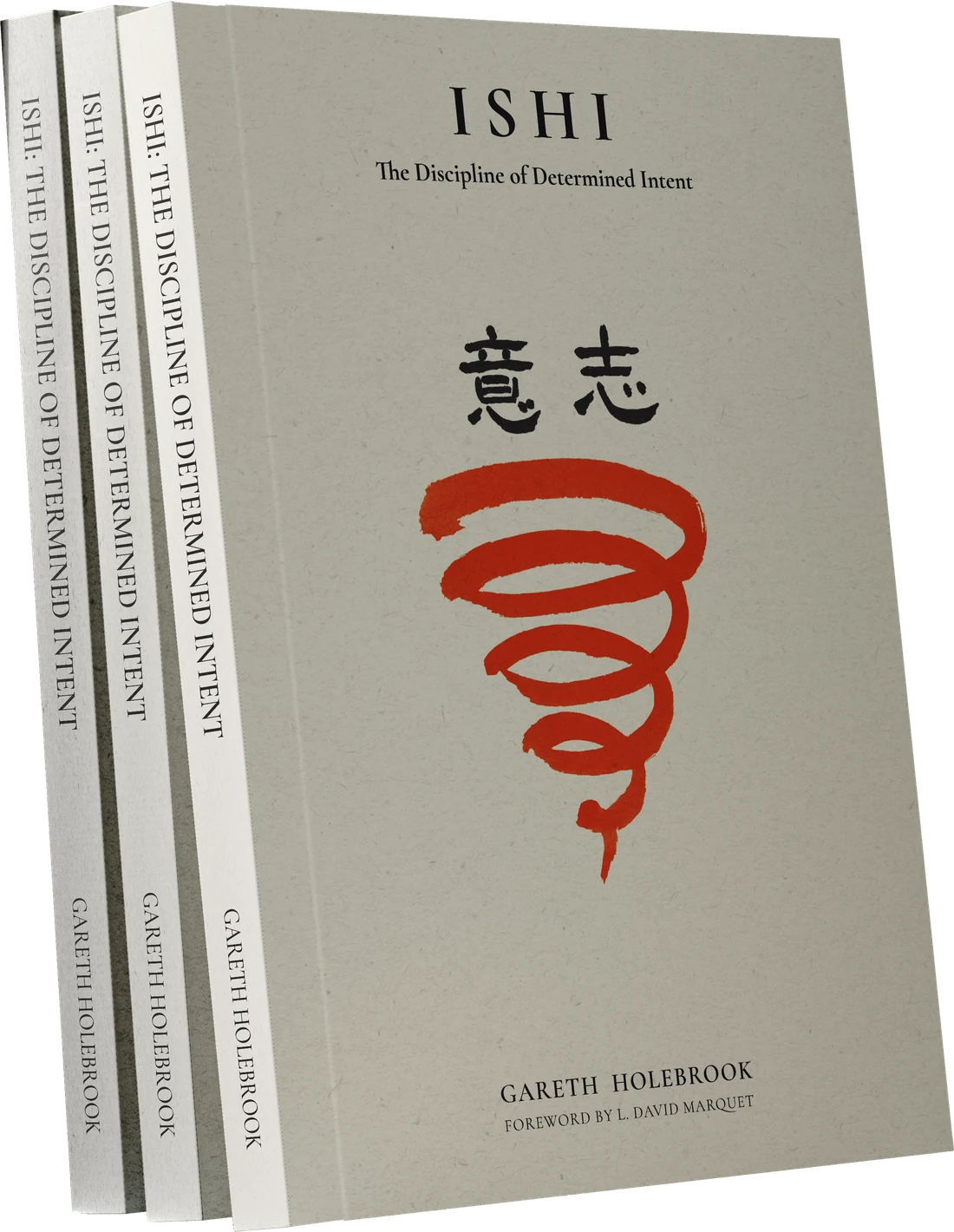
My book, Ishi: The Discipline of Determined Intent, sets out the Ishi Cards purpose
It is on Amazon, in paperback and Kindle, at https://www.amazon.com/dp/1067285512.
The digital edition is on Leanpub at https://leanpub.com/ishidodi.
First published on Substack: read Weekly Ishi 5: Choose Your Hard on Substack.